DRAWINGS, COLLAGES, WORKS ON PAPER
Katrin Ströbel
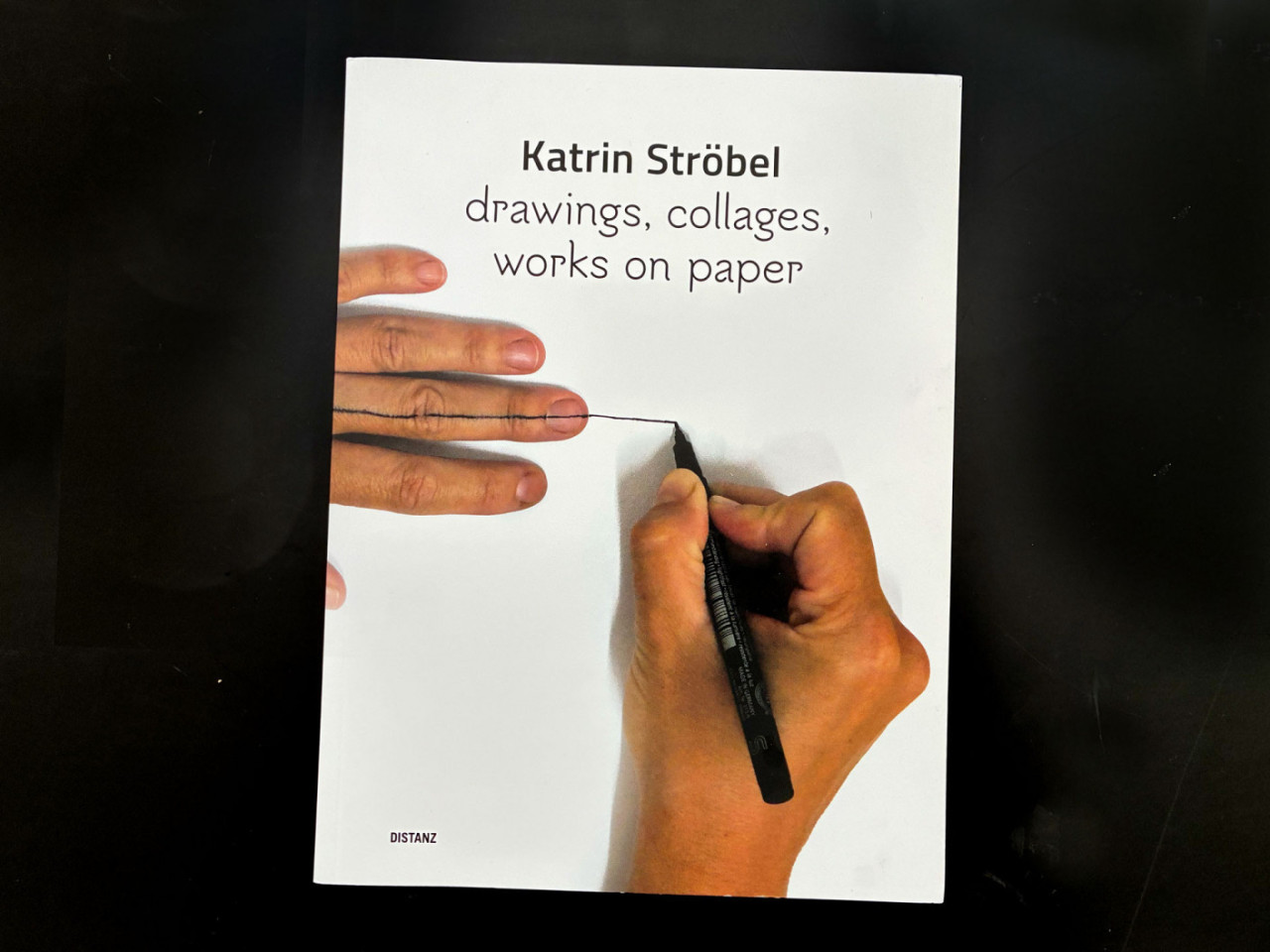
drawings, collages, works on paper
languages: English, French, German
Distanz Berlin, 2023
Drawing is the basis and point of departure of Katrin Ströbel’s practice. Without constraints of technique or format, her works unfold in sprawling installations that often integrate large-scale wall drawings. Ströbel harnesses the diversity of her medium, blurring the boundaries between drawing and writing as well as between line and language and transposing drawing into other media such as photography, video, or the digital realm. Sophisticated observations concerning sociocultural and political issues manifest themselves in her works, which revolve around postcolonial and feminist discourses.
The monograph drawings, collages, works on paper is released on occasion of Ströbel’s receipt of the inaugural fellowship for drawing and paper art awarded by the City of Waiblingen. The publication is the first to present over 150 drawings, collages, and works on paper from different bodies of work spanning around eighteen years in the artist’s career. With a foreword by Anja Gerdemann and an essay by Anita Haldemann.
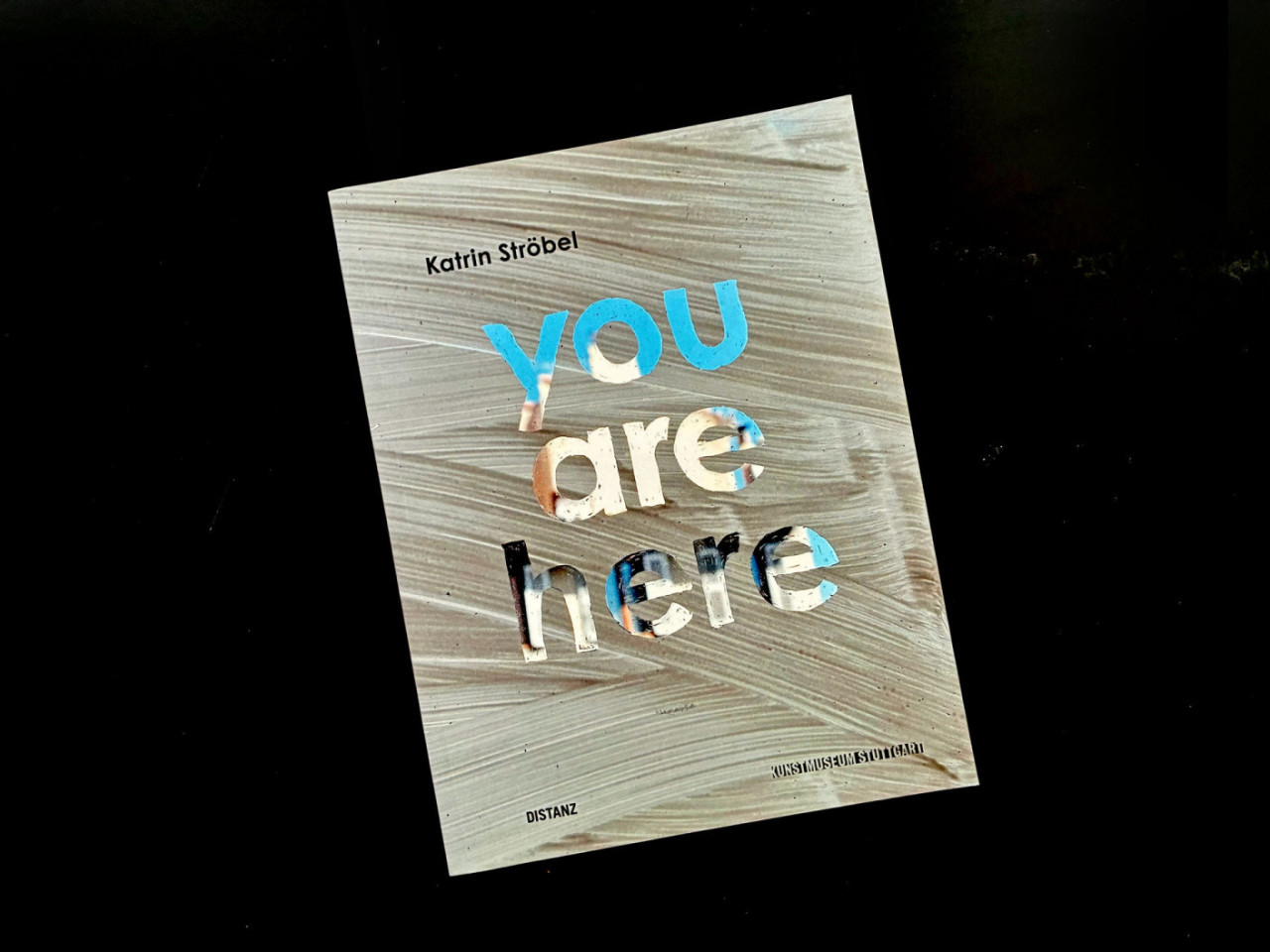
YOU ARE HERE
Katrin Ströbel
you are here
languages: English, French, German
Distanz Berlin, 2021
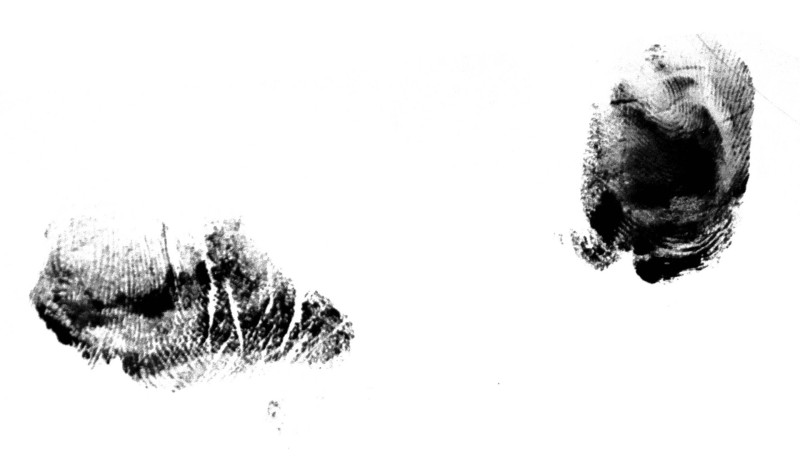
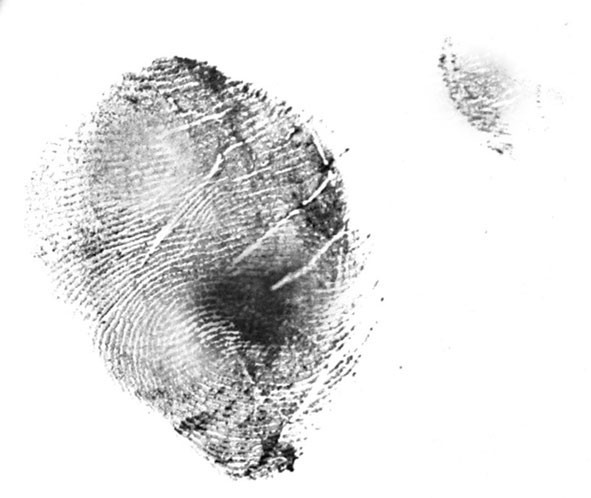
Katrin Ströbel’s conceptual drawings and multimedia installations scrutinize the architectural, social, and urban realities that shape contemporary life. The genesis of her works is site-specific and requires extensive local research, which she then translates into drawings, photographs, and sprawling—and, in many instances, performative—installations. Ströbel is interested in the complexion of a space, its history and function, as well as the social parameters that define the place and the power structures or relations between communities that are encoded in it. Most recently, the artist’s receipt of the 2019 Hans-Molfenter-Preis of the State Capital of Stuttgart was the occasion for the realization of her work Vom Berühren und Begreifen (On Touching and Grasping) in the long hallway of the Kunstmuseum Stuttgart’s collection division. Ströbel invited the museum’s team to discuss their daily chores and to draw on an 80-foot-long wall using fingerprint powder. The deliberate act of touching and revealing the traces of art-world staffers who would otherwise be “invisible” takes on particular relevance in light of the general prohibition on touch in exhibition settings and the new social distancing rules introduced in response to the coronavirus pandemic.
you are here collects Ströbel’s creative reflections on the histories, functions, and social and political contexts of the places where her art comes into being and is presented. The monograph sheds light on her approach, in which drawing serves as a medium of communication between societies and class structures. With a preface by Ulrike Gross and a conversation between the artist and the curator Anne Vieth.
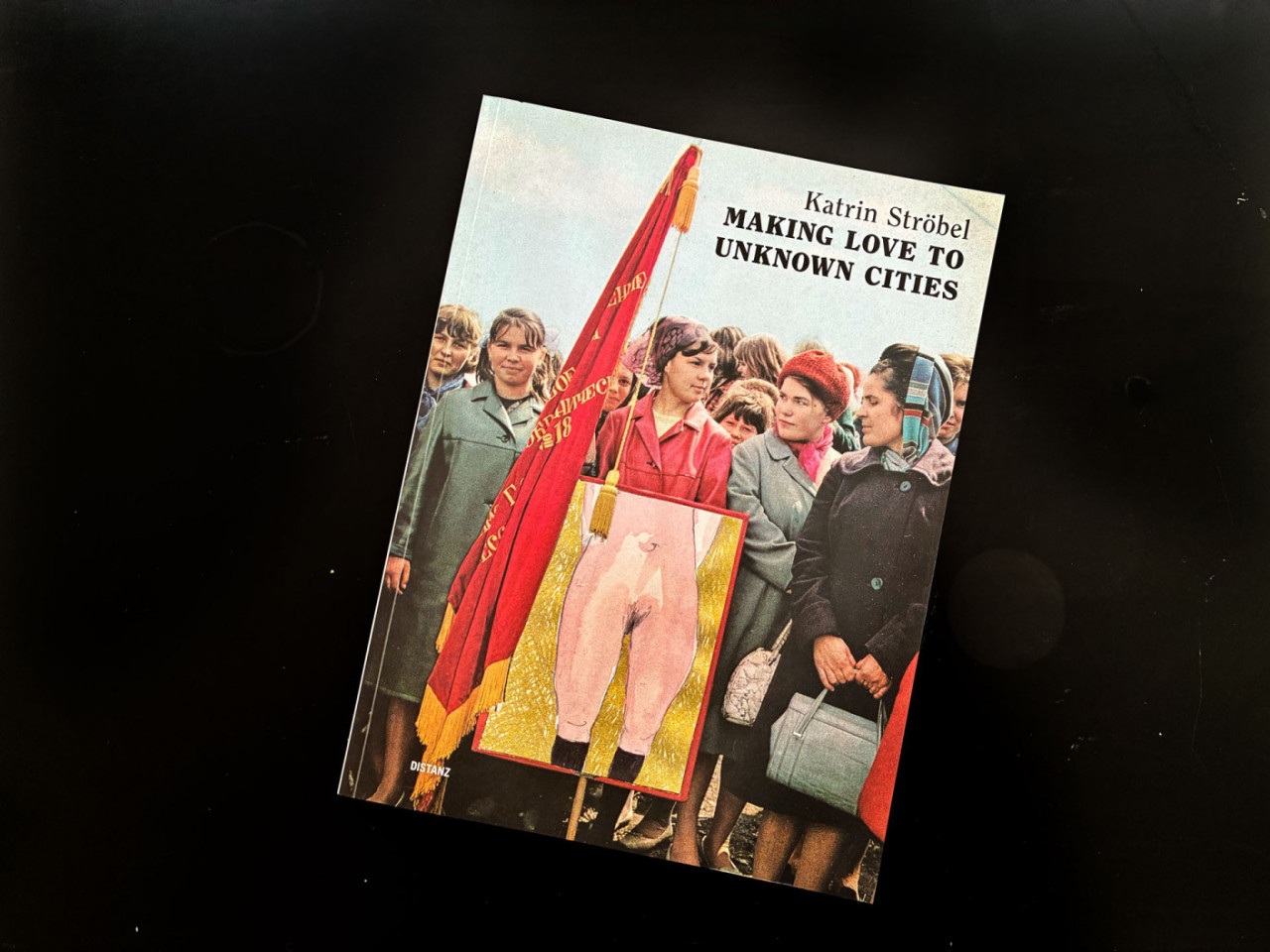
MAKING LOVE TO UNKNOWN CITIES
Katrin Ströbel
Making Love to Unknown Cities
languages: English, French, German
Distanz Berlin, 2020
In her conceptual drawings and multimedia installations, Katrin Ströbel (born 1975 in Pforzheim; lives and works in Marseille, Stuttgart, and Rabat) questions the social and geopolitical realities of the present with a simultaneously playful and critical eye. Her archaeology of everyday life pursues the political as decidedly as modern representations of the female body or practices of cultural appropriation – but also focuses on more private spaces, design objects, and interiors, such as the wallpaper in the studio of the Italian avant-garde artist Dadamaino. The astute negotiation of colonized bodies, spaces, and objects interspersed with cultural codes is reminiscent of Hanna Höch’s early collages. Ströbel lends them her contemporary voice: from the design classic Eames to current gender images to compendia of modern art history, the artist deconstructs Eurocentric culture with a critical-ironic gaze.
The catalog offers an overview of works from 2016 to 2019. With accompanying texts by Julie Crenn, Iris Dressler, Sophie Orlando and Dorit Schäfer.
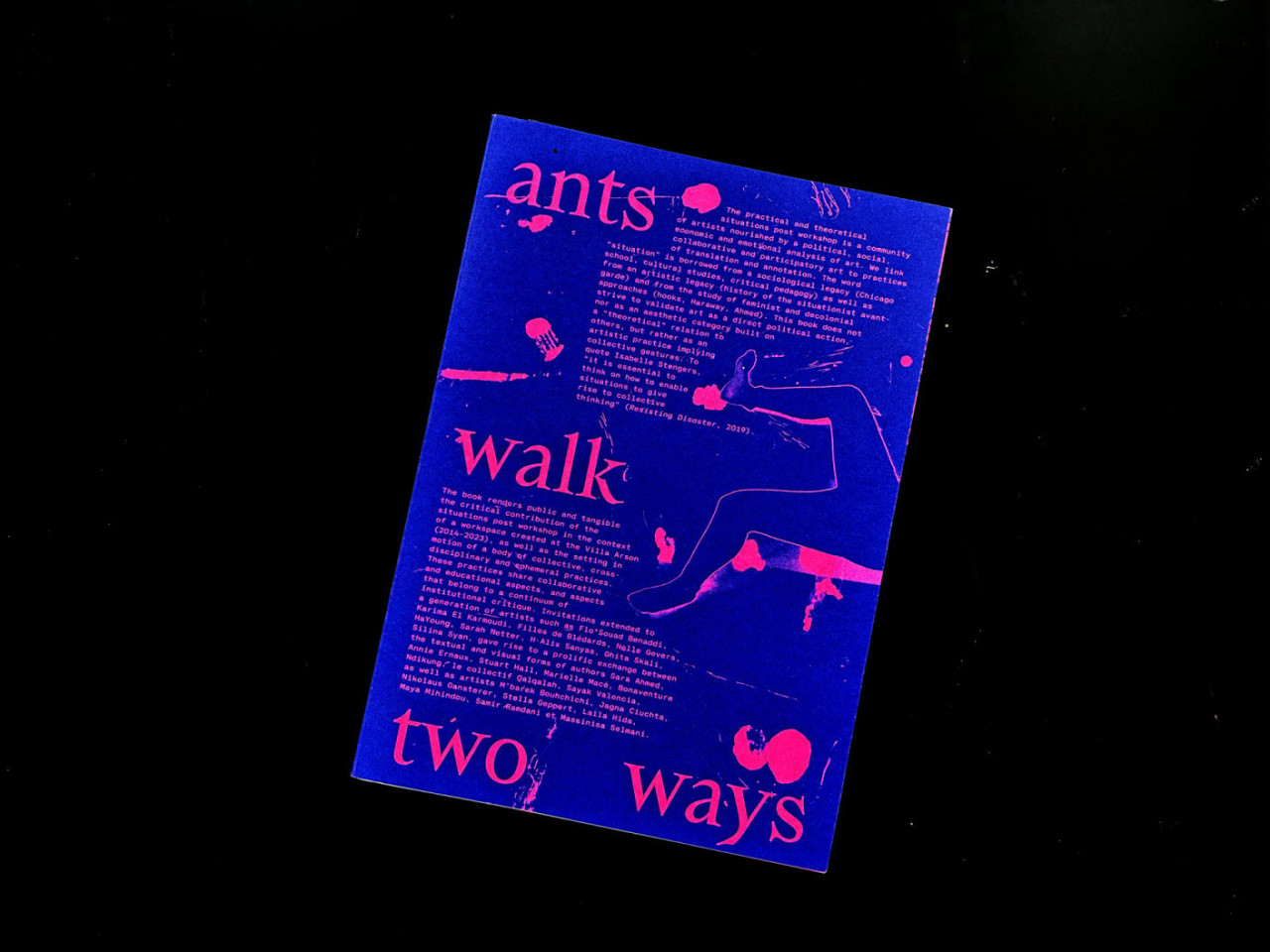
ANTS WALK TWO WAYS
Katrin Ströbel & Sophie Orlando (Ed.)
Ants walk two ways - Les fourmis courent en deux sens
languages: English, French
Archive Books, Berlin/Milan, 2024
A collective publication resulting from a research project led by Sophie Orlando and Katrin Ströbel that takes as its starting point the way in which current geopolitical, economic and social changes induce a renewal and adjustment of artistic strategies, by investing, in an intersectional perspective, contextual thinking and feminist, queer and postcolonial thinking in an artistic and conceptual way.
The practical and theoretical Situations post workshop is a community of artists nourished bya political, social, economic and emotion alanalysis of art. We link collaborative and participatory art to practices of translation and annotation. The word "situation" is borrowed from a sociological legacy (Chicago school, cultural studies, critical pedagogy) as well as from an artistic legacy (history of the situationist avant-garde) and from the study of feminist and decolonial approaches (Hooks, Haraway, Ahmed). This book does not strive to validate art as a direct political action, nor as an aesthetic category built on a "theoretical" relation to others, but rather as an artistic practice implying collective gestures. To quote Isabelle Stengers, "it is essential to think on how to enable situations to give rise to collective thinking" (Resisting Disaster, 2019).
The book renders public and tangible the critical contribution of the Situations post workshop in the context of a workspace created at the Villa Arson (2014–2023), as well as the setting in motion of a body of collective, crossdisciplinary and ephemeral practices.These practices share collaborative and educational aspects, and aspects that belong to a continuum of institutional critique. Invitations extended to a generation of artists such as Flo*Souad Benaddi, Karima El Karmoudi, Filles de Blédards, Nelle Gevers, HaYoung, Sarah Netter, H·Alix Sanyas, Ghita Skali, Silina Syan, gave rise to a prolific exchange between the textual and visual forms of authors Sara Ahmed, Annie Ernaux, Stuart Hall, Marielle Macé, Bonaventure Soh Bejeng Ndikung , Qalqalah Collective, Sayak Valencia, as well as artists M'barek Bouhchichi, Jagna Ciuchta, Nikolaus Gansterer, Stella Geppert, Laïla Hida, Maya Mihindou, Samir Ramdani, and Massinisa Selmani.
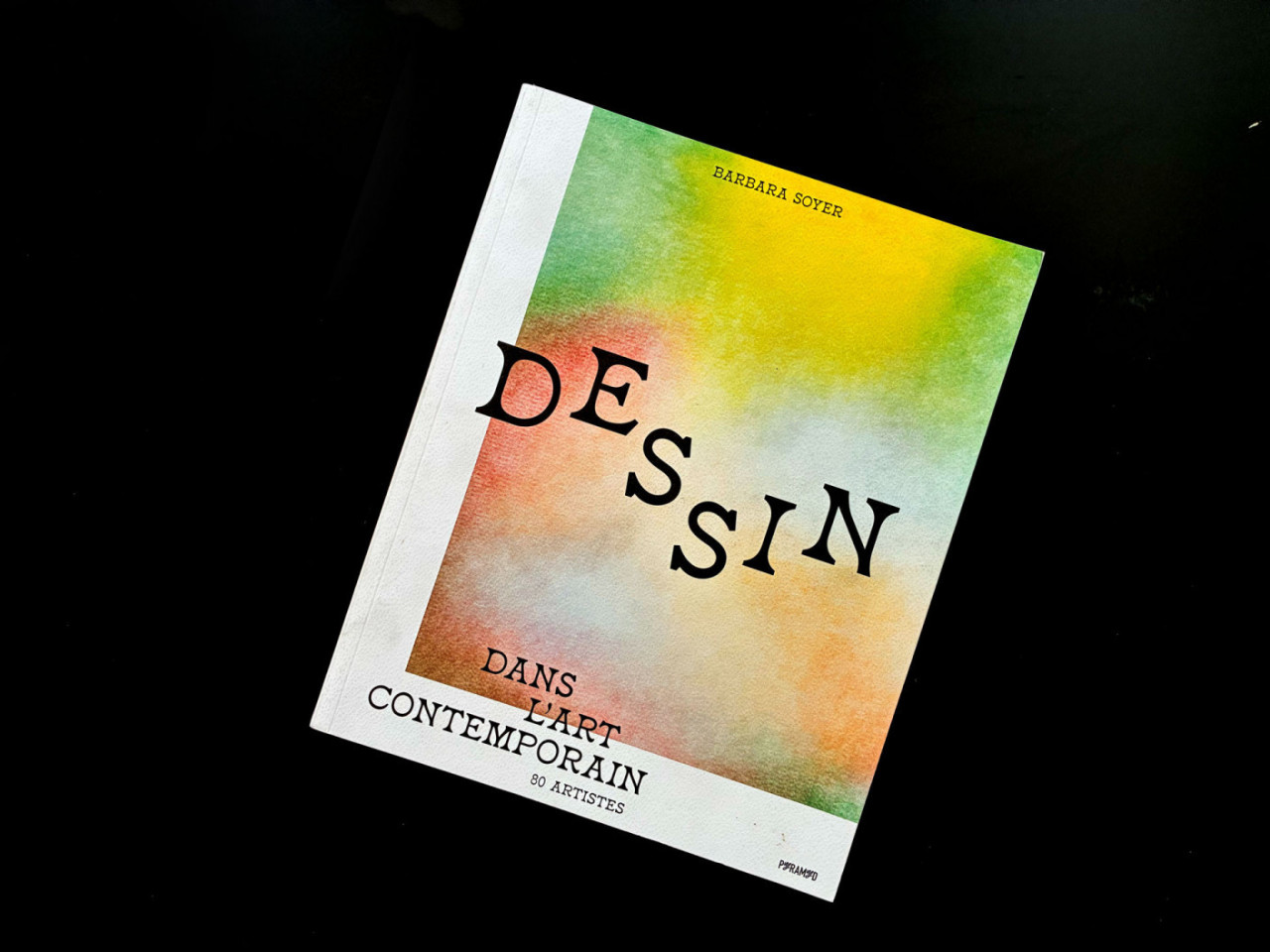
DESSIN DANS L'ART CONTEMPORAIN
Barbara Soyer (Ed.):
Dessin dans l'art contemporain - Drawing in Contemporary Art
language: French
Pyramyd Edition, Paris 2022
Over the past two decades, drawing has attracted growing interest from the public, institutions, and artists alike. Moving beyond the realm of the sketch and the study, it has become an art form in its own right and now unfolds across a wide range of surfaces.
Presenting the work of 80 contemporary artists—women and men—Barbara Soyer offers in this book a surprising and diverse panorama of the medium. The publication multiplies perspectives and gives space to a plurality of voices, reflecting the freedom and richness of contemporary drawing.
Preparatory drawings, autonomous works, figurative, abstract, quasi-photographic, painterly, three-dimensional, in black and white or in color; works in ink, pastel, watercolor, or gouache; artworks on paper, canvas, cardboard, walls, or textiles: the creations revealed in this book all say something about what drawing is—and about the world today.
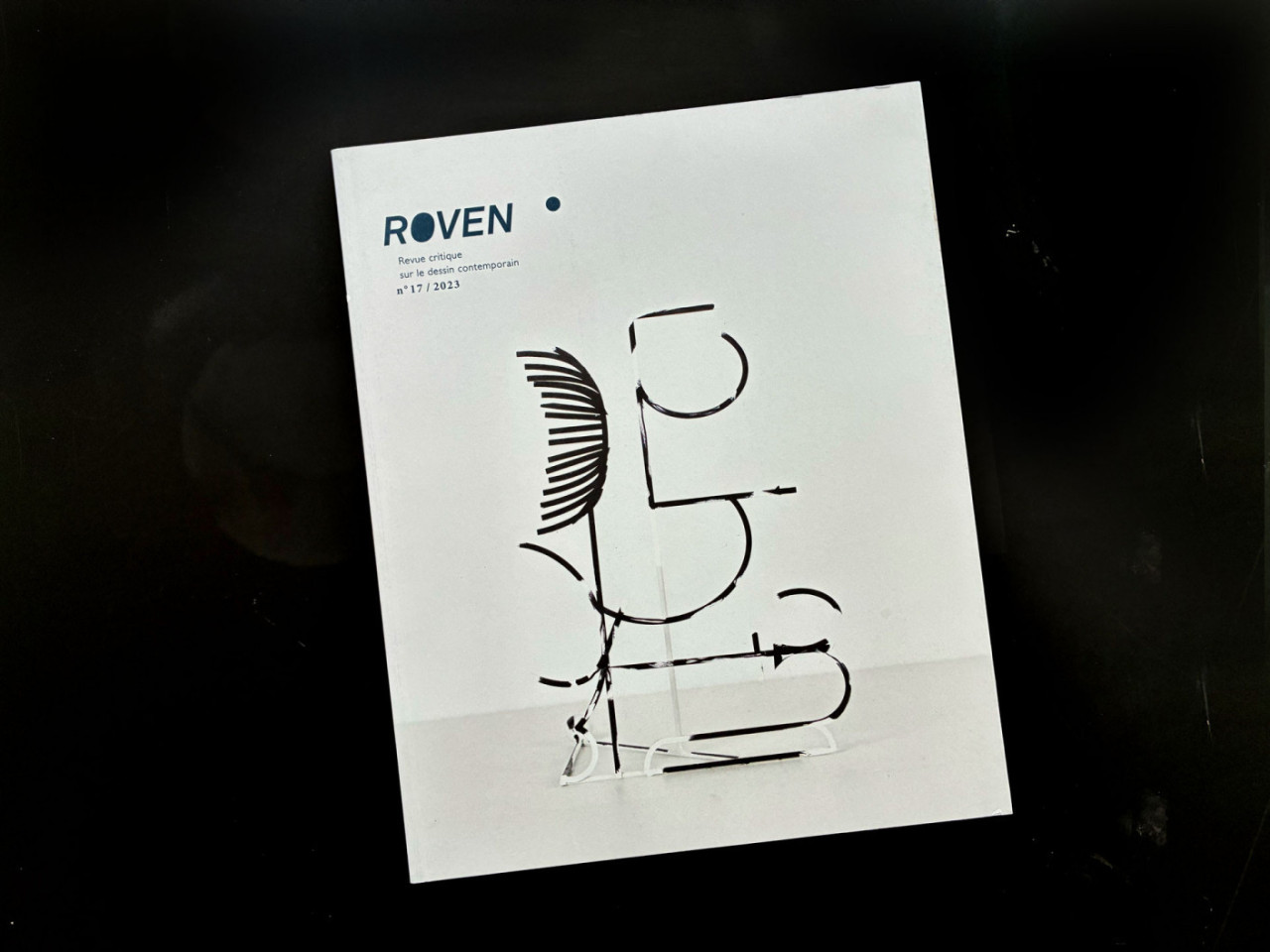
ROVEN 17 : KATRIN STRöBEL. RESTER POREUSE
Johana Carrier, Marine Pagès (Ed):
Roven 17 : Katrin Ströbel. rester poreuse - remaining porous
Carte blanche including a conversation between French curator Hélène Guenin and Katrin Ströbel
language: French
Roven Edition Paris, 2023
An artist, researcher, and teacher, Katrin Ströbel practices drawing—often in situ—in dialogue with its context (urban, geographical, or social), following a feminist and inclusive approach. While also addressing her theoretical research, this interview focuses on her artistic practice, which notably questions the capacities of drawing in terms of visibility and autonomy by casting a critical eye on the artistic context.
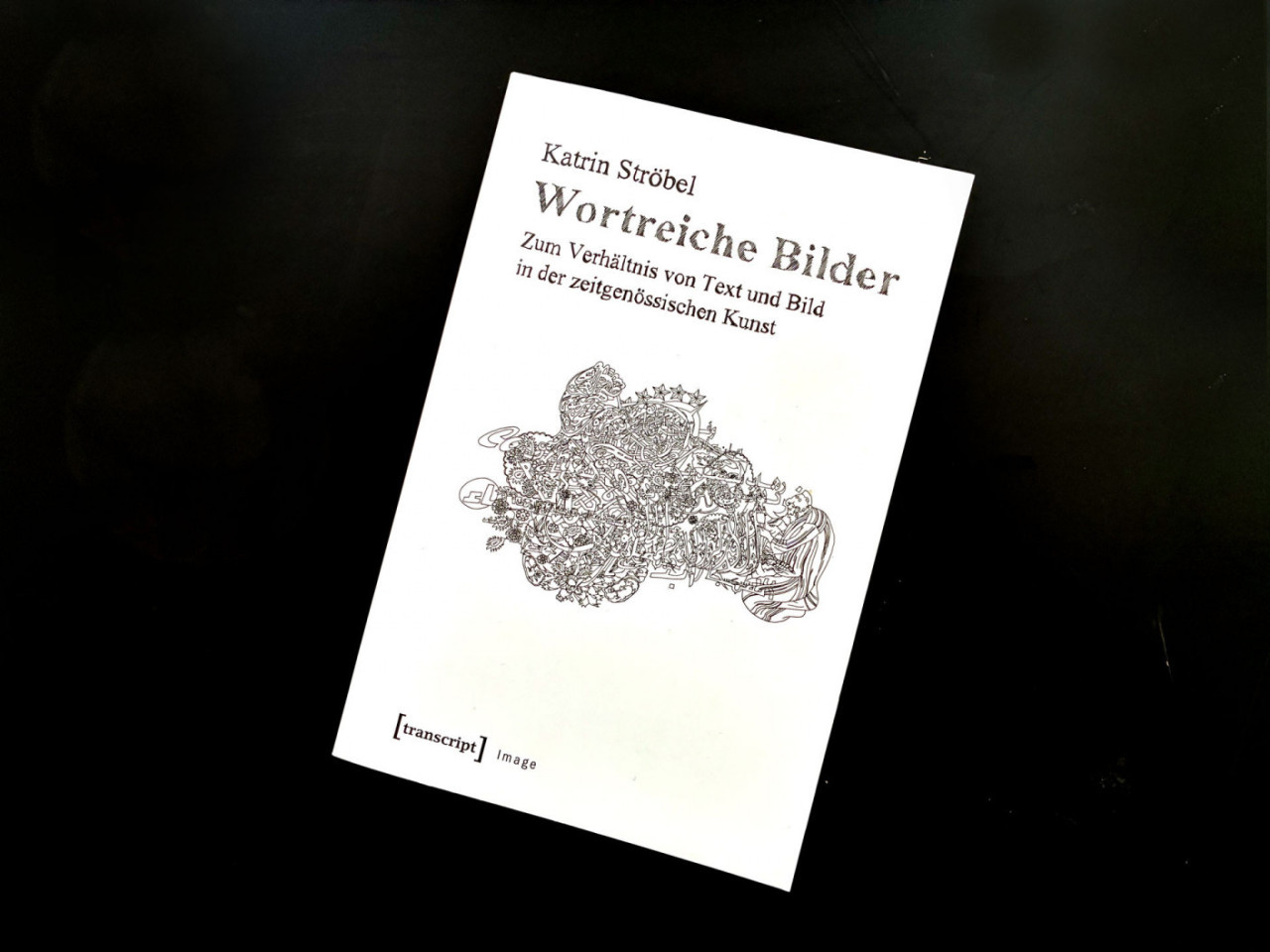
WORTREICHE BILDER
Katrin Ströbel
Wortreiche Bilder – Zum Verhältnis von Text und Bild in der zeitgenössischen Kunst
Word-rich Images – On the Relationship between Text and Image in Contemporary Art
language: German
transcript Bielefeld, 2013
At the beginning of the 21st century, text has become a self-evident formal device in the visual arts. But why do artists use text? And how do they employ writing? This study outlines the key thematic fields of text–image combinations in contemporary art. The relationship between text and image is examined, among others, in works by Raymond Pettibon, Christopher Wool, Sophie Calle, and Jenny Holzer. Katrin Ströbel not only explains how today’s generation of artists engages with text and language; she also shows how the changing conditions of artistic representation, as well as of visual and verbal signification, are reflected in the works discussed.
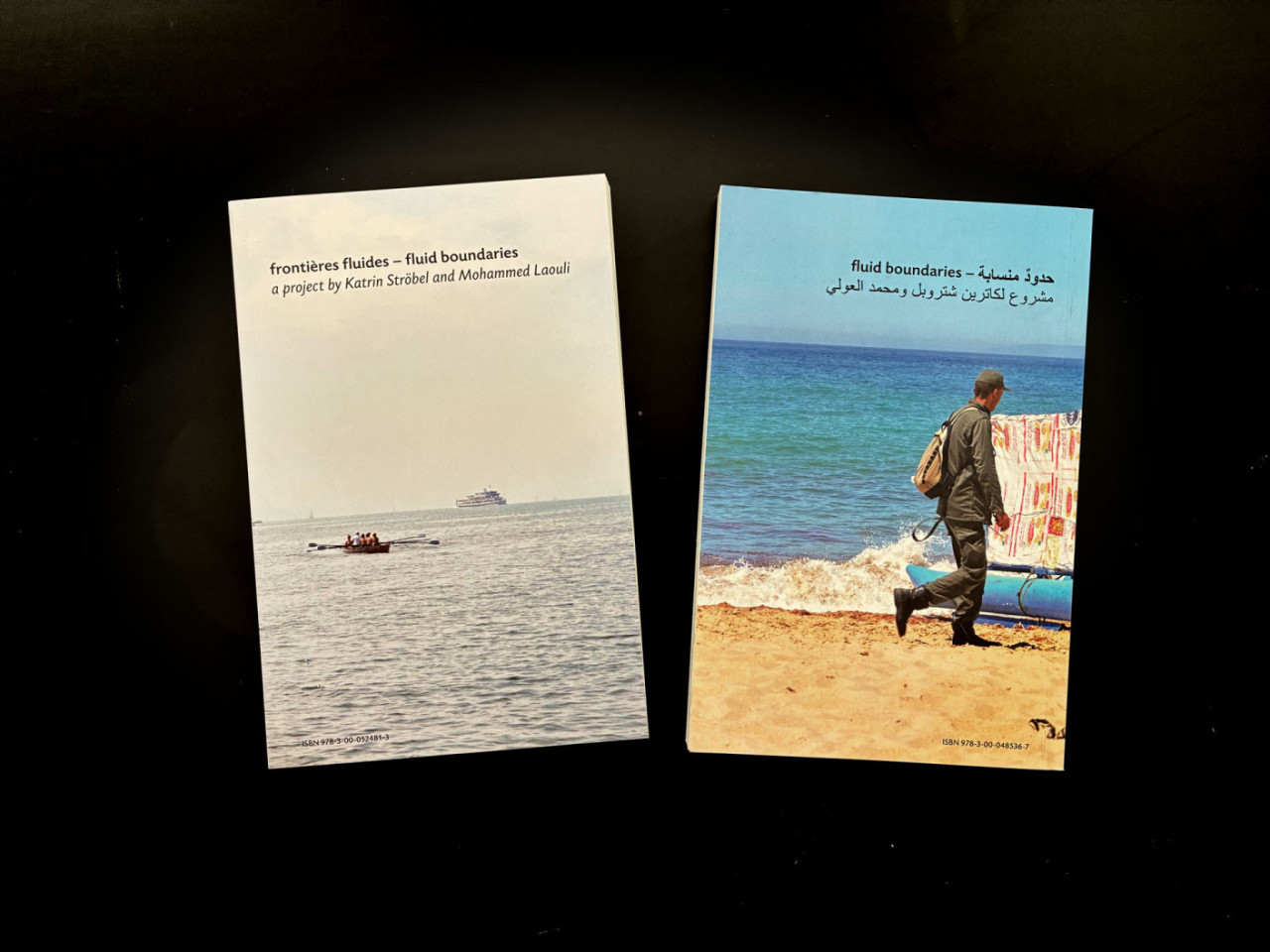
FRONTIèRES FLUIDES - FLUID BOUNDARIES
Katrin Ströbel & Mohammed Laouli
frontières fluides - fluid boundaries
languages: English, Arabic
Le Cube - independent art room, Rabat and Zeppelinmuseum Friedrichshafen, 2016
Two publications that accompagny the first years of Frontières Fluides, fluid boundaries, a project by Katrin Ströbel and Mohammed Laouli which has been running since 2013. The ongoing project focuses on migration and transit movements between Europe and North Africa to question the cultural, social, and economic effects of colonialism and the European migration policy.
The first book includes a text by Karima Boudou, Curator at S.M.A.K., the Museum of Contemporary Art in Ghent, the second publication an essay by Bonaventure Sog Bejeng Ndikung, curator and director of HKW, Berlin.
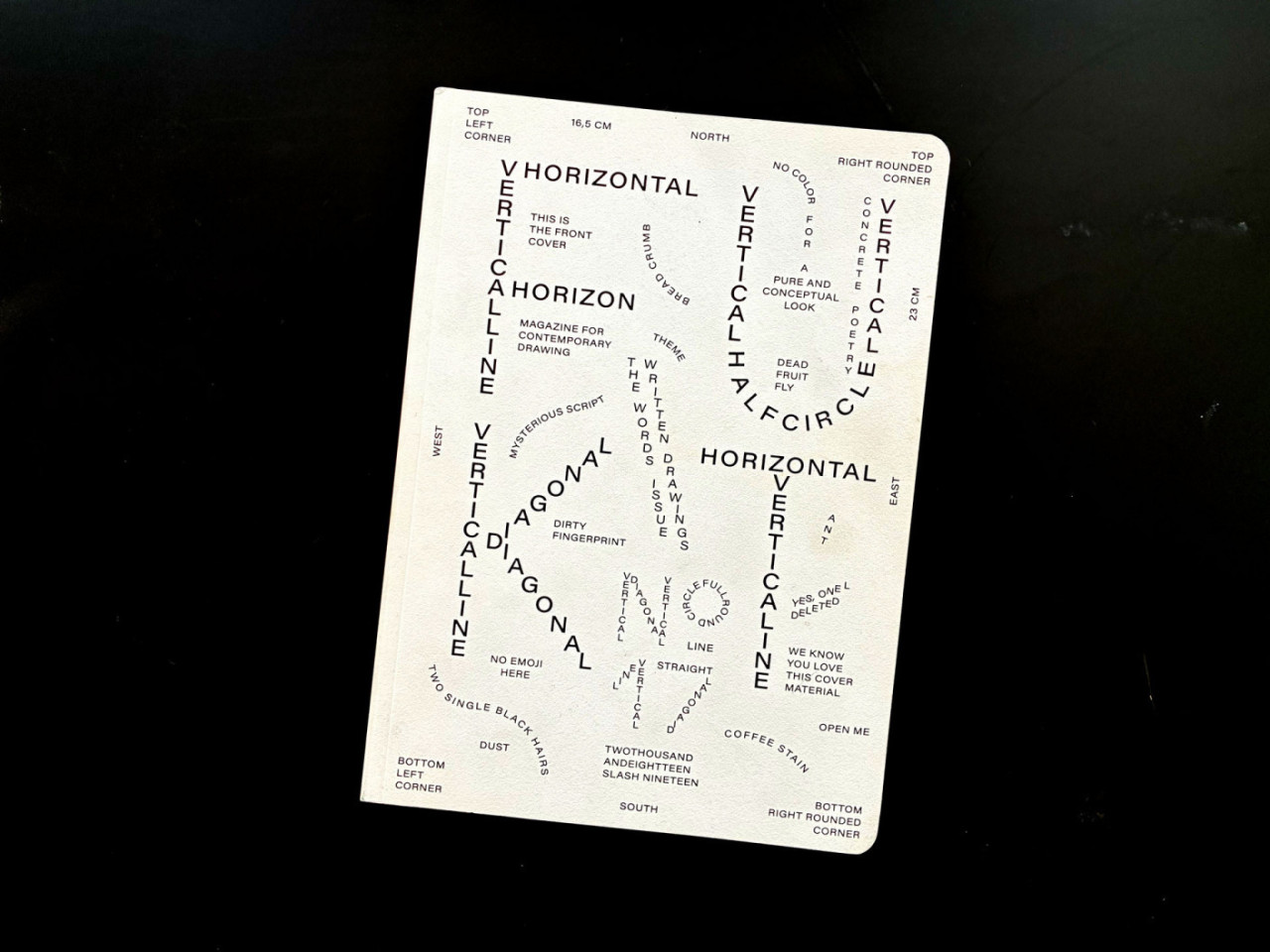
FUKT NO. 17 - THE WORDS ISSUE - WRITTEN DRAWING
Björn Hegardt (Ed.):
Fukt Magazine No. 17 - The Words Issue - Written Drawings
language: English
Fukt, Berlin, 2018, reprint 2022
Fact No.17 is a celebration of words and their presence in the medium of drawing. In a time of fake news and populism, the word seems to have lost some ground and anti-intellectualism appears to be taking over. It’s more important than ever therefore to praise the written expression in all its forms – whether it’s been rearranged, cut, scribbled or even if it just looks like writing, all of which you can find here. Contributions artists: Ed Ruscha, Paula Scher, Simon Evans TM, Sketchbook Project, Irma Blank, Nina Papaconstantinou, Mirtha Dermisache, Ariane Spanier, Suzanne Treister, Karl Holmqvist, Pavel Pepperstein, Ingwill Gjelsvik, Marco Raparelli, Nadine Fecht, Shantell Martin, Katrin Ströbel, Xu Bing, Paula Troxler, Mark Lombardi, Stefan Brüggemann, Sol LeWitt, Pae White, Malgorzata Zurada, Philip Loersch, Stefan Marx, Prinzhorn Collection, Roni Horn, Peter Phobia, Annie Vought, Henri Chopin, Petra Schulze-Wollgast, Thomas Broomé, Meg Hitchcock, The Voynich Manuscript