DRAWING AS ATTITUDE
Katrin Ströbel is an artist who draws; drawing forms the foundation and point of departure for her work. Since the art world began taking drawing more seriously in the 1960s and 1970s, the medium has largely departed from its drafting function to develop into an autonomous genre whose boundaries are porous in all directions.(1) Ströbel practices a drawing without limitations in technique or format. She creates room-sized installations consisting of wall drawings that call attention to the floor, ceiling, and the surrounding public space (. . . and then we started a revolution of desire [My North Is Your South], 2018; Flying Carpets, 2005). She has applied arrows to the floor to indicate the cardinal direction of prayer for three different religious communities, pointing both to the outside world and to an imaginary space (World Wide Praying Directions, from 2008 on). Her drawing can also take on performative qualities (Wandelnde Blätter [Gespenstschrecken] or other failed attempts of cultural appropriation, 2018, p. 212–213) or participatory dimensions (Vom Berühren und Begreifen, 2021). One thread running throughout is the mutability and conversion of drawings into different “material states,” for instance, enlarged and transferred onto walls, digitally reworked and printed, or documented in photographs. The concept of the unique, original drawing no longer applies. Moreover, the boundaries between drawing and writing, line and language are blurred.
Why draw at all? In an interview with the curator Hélène Guenin, Ströbel recently said: “I love the fact that drawing and its emancipatory and subversive power is underestimated.”(2) Ströbel does not paint pictures or create sculptures that find a place in permanent museum collections. She uses drawing to occupy niches and to leave temporary traces in public space, as well as to fill large rooms in exhibitions. In the end, the wall drawings are painted over again, the paper folded up and packed away until it finds a place in a new location.
Drawing is more open than any other medium; it’s the ideal starting point for transferring to or further developing an idea in another medium, for instance photography, video, or on the computer. Drawings on paper, folded to a smaller format or made up of multiple parts, are easy to transport in order to then manifest themselves again in a new place. Thus, the medium suits the artist’s “nomadic” lifestyle.
Occasionally, Katrin Ströbel employs minimal gestures to radically shift meaning and allow life to assert itself in all its potential diversity against nationalism and xenophobia. In 2009, for example, in Valence, France, she turned the name “LE PEN,” scrawled in graffiti on a concrete wall, into the word “LEBEN,” German for “life.”(3) This work embodies a great deal of what goes to make up Ströbel’s art. In transit to different continents, countries, regions, and art venues, she keenly observes the socio-cultural and political issues and then analyzes and reflects on them, resulting in works that expand our perception and open our eyes in the best sense. In this minimal but significant graffiti intervention, which lives on in photographic documentation, Ströbel takes on the role of a resistance fighter absent from the scene. She employed a similar strategy in 2008, when she replaced the sentence “IN GOD WE TRUST” (p. 139) on the back of the American dollar bill with its Arabic translation, reproduced it digitally, and posted it in public spaces in Lagos on walls used for ads.(4) The change in language drives home the link between Christianity and political and economic power relations in post-colonial Africa. The two works bear defining features of Ströbel’s art: she reacts to what she finds and uses it as a starting point for exposing social issues and power relations. To this purpose, she often uses language, or rather different languages, words, and their reinterpretation or translation. Ströbel has been active as an artist in Europe since 2004, often in Africa, Australia, South America, and the USA. Today she lives and works in Marseille, Stuttgart, and Rabat, and is thus constantly confronted with shifts in language and culture and sensitized to their finer nuances.
In drawing, Ströbel often begins with existing images in two senses: for instance, she uses illustrations from books, which she then reworks to reveal the ideology behind them (pp. 84–85). In this manner, she has altered images of male animals and given them human and characteristically female features. A house cat on a chair acquires legs and a pair of pumps on its feet (Hauskatze, p. 94); a cheetah is colored blue and given breasts. Ströbel corrected the captions, turning “jaguar” and “cheetah” into the German female forms for the words, “Jaguarin” (p. 92) and “Gepardin” (p. 93). Ströbel is questioning not only the masculine as “standard,” but also the stereotype of the female body reduced to its reproductive function, which the patriarchal tradition equates with nature and the animalistic as a counterpoint to human intellect, which is seen as male.
One drawing uses an old black-and-white photograph—a book illustration—of Chilkoot Pass on the border between Alaska and British Columbia, Canada (Le pèlerinage, p. 113).(5) The pass was an important route for prospectors in the late nineteenth century and key in terms of conquering territory and utilizing and dominating nature. With only a few added lines, Ströbel adds pubic hair to the gap between two mountains, which suggest a pair of spread legs reminiscent of Gustave Courbet’s world-famous painting L’origine du monde of 1866. Courbet’s painting portrays a woman’s naked loins; paired with the title, these become the origin of all human existence. The painting, a work commissioned by the Ottoman diplomat Khalil Bey for his erotica collection, was conceived for the male viewer. Ströbel titled her landscape Le pèlerinage: thus, a woman’s sexual organs become a place of pilgrimage for the male conqueror. Adding a few strokes to printed images opens up new possibilities, for example a photograph of a male body raises questions when a female lower body is added (Little death, p. 109). In another photograph from the time of the “pioneers,” Ströbel draws a naked “Cubist” woman with her long arms wrapped around the men about to cross a frozen lake with their sled dogs (Carlo, Dick, Médor and the cubistic woman, p. 116). According to the revised caption, she saved everyone’s lives. Which underscores the fact that women are still absent from many narratives. Collage lends itself particularly well to painful cuts through an oppressive system of representation. A series of collages entitled Body Politics from 2016 demonstrates the technique’s potential.(6) When she draws a male body alongside two women in white lab coats and places it on an imaginary examination table to study it “using the most modern means” (Body Politics III [Investigations], p. 101), Ströbel reverses gender roles. The male nude is based on the so-called Barberini Faun (Glyptothek Munich), a sculpture of a drowsing satyr portrayed as a muscular young man losing his balance and about to slip off his seat. Ströbel draws a bare lower body on a sign held by women protesting, as if they were demonstrating for the right to one’s own body, which to this day is not guaranteed everywhere (Body Politics III [manifestation], p. 98). Motherhood seems to be the subject of another collage in black and white. A woman’s body is trapped in an unidentifiable machine on which a small child is hanging, with the woman–machine construct swaying on long, thin legs (Body Politics V [Kiste], p. 99).
In the spring of 2020, during the Covid pandemic and the restrictions on freedom of movement, which were massive in France, Ströbel created a series of forty collages titled Les confiné.e.s. Becoming sculpture. Undoing sculpture (pp. 62–83). Without access to the studio, she composed symbols of the pandemic at home using pages from magazines, ads, and even butcher paper and other material. They address the threat to health, a focus on domestic activities, and the seemingly slow passage of time, as well as the loneliness and domestic violence lurking behind masks and closed doors. Being locked up at home leads to the rigidity and petrification of bodies, which become sculptures or are trapped inside them. The burden that women and especially mothers carry is an important topic for Ströbel. The drawing How to carry your burden I (p. 136) depicts a naked woman carrying a huge rock on her back in her head scarf. It looks like she should have fallen backwards long ago. Although the theme of motherhood and its compatibility with making art is increasingly a subject of discussion today, it’s still taboo in the art world. The drawings also express the downsides of motherhood—exhaustion and being reduced to the body and its needs (pp. 88-91). A woman’s body is bent over and her hands and feet are clinging to the ground, as if all four limbs were forever buckling under an invisible burden, unable to escape from the earthly (Müdigkeit 2, p. 89). Through the addition of two eyelids with eyelashes, a sketch of a vagina, uterus, and ovaries in yellow and red chalk is turned into a woman’s face (Müdigkeit 3, p. 90).
Ströbel also draws the alternative possibility, women’s bodies cavorting exuberantly in the air, for all intents and purposes naked (p. 42, pp. 192–195). The work is titled Plejaden (Is flying controlled falling or falling a mode of flying?), which Greek mythology portrayed as nymphs. These virgin companions of Artemis turned into doves (peleiades) while fleeing from Orion and were dispatched to the night sky as a constellation. In Str.bel’s work, the women fly about freely without having to serve the male gaze. Living it up on the big wall, these bodies are anything but idealized. Ströbel takes a similar tack in the murals On fire and . . . and then we started a revolution of desire (spring) (both 2021) as well as I come in peace (p. 46), which depict lustful female and non-binary bodies revolving around themselves in a whirl of erotic power. This dynamic is expressed in the drawing’s animated style.
The proximity of drawing and writing was not only a central theme for Katrin Ströbel as an art historian; it also resonates in her art.(7) In a monotype from 2016, she drew Joseph Beuys (1921–1986) with a wool blanket over his head and a staff, together with the coyote from his famous happening I Like America and America Likes Me of May 21–25, 1974 in the René Block Gallery in New York (Beuys Burka, p. 166). The subject of the piece is what Beuys called the trauma of the US, which he traced back to the oppression of the native population. On an accompanying sheet of paper, also a monotype, Ströbel lists the words and names Beuys, Burka, Sankt Martin, Judas, and Giotto, expanding the range of associations possible in drawing. Comparing Beuys’s cloak to a burqa points to current debates and conflicts between cultures and religions. On the other hand, Saint Martin, who dates far back in history, used his sword to cut his cloak in two and selflessly gave half to a beggar at the Reims city gate who was freezing from the winter cold. Through this act of compassion, he revealed himself to Christ and lived from that moment on as a devout man. The piece of writing is also a drawing insofar as Ströbel did not spell out the words in one go, but drew the outlines of the capital letters. She had to apply them to the plate in mirror image so that they would appear correctly when printed. The random and accidental pressure marks in the two monotypes emphasize the handmade quality of the works and can give the illusion that they are older documents, drafts that had never been executed. This gives the two monotypes a provisional feel; they remain thoughts that nonetheless have a potential explosive power. Finally, the name of Giotto (1267 or 1276–1337) takes the viewer to the early Renaissance and to the famous fresco of the Judas Kiss in the Scrovegni Chapel in Padua, which introduces another level of meaning, namely Judas’s betrayal of Christ, who is almost completely enveloped in the large yellow cloak Judas is wearing. Ultimately, Judas is responsible for Jesus’s arrest and martyrdom. These seemingly modest monotypes illustrate the subversive power of drawing and the conceptual space they can open up. The spontaneous quality of drawing and the direct expression of thought become visible on paper.
As Dorit Schäfer has pointed out, the choice of drawing technique is an important part of Ströbel’s work on paper. Material and method convey the respective content.(8) This becomes clear in another monotype: for Gimme Shelter (2016), Ströbel painted the surface of the glass plate gray with broad, rhythmic brushstrokes (p. 141). She used her finger to write the title into the paint, once again in mirror image. The words feel like an urgent cry for help, as if someone had written them on a fogged-up pane of glass. But the printing process preserves the lettering on paper, documenting it forever. (9)
In Ströbel’s work, it’s not only the small-format, intimate drawings, collages, and monotypes that take on a subversive power. Initially, the multi-part work Ile de Gorée from 2011 (p. 56), reminds European viewers of the palm-lined beaches of a holiday paradise, as they once adorned apartments of the 1970s in the form of wallpaper. The two fans simulate wind and blow the palm leaves toward the left. In this deserted landscape, however, the black, which looks like India ink, already hints at something malevolent. One can see the view from the island of Gorée looking back toward Dakar. The Senegalese island, from where enslaved people from African countries embarked the ships that took them across the Atlantic to America, is now a UNESCO World Heritage site, a “memorial island” and symbol of the slave trade. Ströbel digitized the drawing on which the installation is based and printed it on A4 sheets of paper, which flutter in the breeze the fans create, intensifying the mood of the landscape, visualizing the work’s fragility, and adding an acoustic component. This vulnerability is an important aspect of the drawing, which is monumental in size. This also applies to the diptych Casablanca décalé (Washington) (p. 182) of 2015, which Ströbel drew with a permanent marker, also resembling ink, on blue-backed paper measuring 135 x 150 cm. The creases in the paper are clearly visible; the artist folds the large sheets together like maps or city plans to store and transport them between exhibitions. While this may be pragmatic, the reduction of the work to a small volume underlines the drawings’ modesty, which can only unfold their full effect again in an exhibition space. Here, too, a deserted landscape can be seen, spread out in the blazing sunlight. A city of concrete that swallows up its inhabitants. Ströbel draws with a thinking hand on fragile paper, on walls, and on floors. Yet she avoids a handwriting or a signature style. The artist refrains from making a political statement, and yet she takes a clear position on the major issues of our time, such as the postcolonial and feminist discourses. Drawing becomes an activist gesture, or as Ströbel herself puts it: “[. . .] for me, drawing is more of an attitude than a medium.” (10)
Dr. Anita Haldemann
Curator and head of the Kupferstichkabinett (Department of Prints and Drawings) at the Kunstmuseum Basel
1 See e.g., Cornelia H. Butler and Catherine de Zegher (eds.), On Line: Drawing Through the Twentieth Century, exh. cat., The Museum of Modern Art, New York, 2011.
2 “Carte blanche: Rester poreuse. Entretien avec Katrin Str.bel par Hélène Guenin,” Roven. Revue critique sur le dessin contemporain, No. 17 (2023), pp. 42–53.
3 Petites corrections de mon environnement, 2009, corrected graffiti, Valence, ill. in Ulrike Groos and Anne Vieth (eds.), Katrin Ströbel—you are here, Kunstmuseum Stuttgart (Distanz Verlag: Berlin, 2021), pp. 120–121.
4 In God We Trust, 2008, digital prints, Lagos. See Groos/Vieth 2021, pp. 58–59.
5 Fig. in Katrin Ströbel. Making Love to Unknown Cities (Distanz Verlag: Berlin, 2021), p. 23.
6 See Julie Crenn, “Bodies as Archives—Katrin Str.bel’s Body Politics,” in Katrin Ströbel. Making Love to Unknown Cities (cf. note 5), p. 51.
7 See Ströbel’s dissertation Wortreiche Bilder. Zum Verhältnis von Text und Bild in der zeitgenössischen Kunst (transcript: Bielefeld, 2013).
8 Dorit Schäfer, “Variations on the Drawn: Notes on the Work of Katrin Ströbel,” in Katrin Ströbel. Making Love to Unknown Cities (cf. note 5), pp. 18–19.
9 Ibid.
10 “Corners of Rooms, Elevated Train Stations, and Sounds in the Distance: Anne Vieth in Conversation with Katrin Ströbel,” in Ulrike Groos and Anne Vieth (eds.), Katrin Ströbel—you are here (cf. note 3), pp. 18–24.
Published in: Drawings, Collages, Works on Paper, Distanz Berlin, 2023
CORNERS OF ROOMS, ELEVATED TRAIN STATIONS, AND SOUNDS IN THE DISTANCE
Anne Vieth in Conversation with Katrin Ströbel
What do you look out for when you enter a room for the first time? What are the signs you pay attention to when you perceive a space, assess it, orientate yourself in it?
To begin with, it depends on what kind of space it is. It also matters if it’s in a museum or an art institution, whether I’m entering as a viewer to see an exhibi-tion, or visiting the same rooms as an artist with the intention of putting up a show or making a work there. This might sound pretty banal at first, but for me it’s important to stress that spatial perception doesn’t only depend on the architecture, but also on the person who enters it, among other things. I try to understand a room in its entirety; the dimensions, volume, spatial axes, etc. play an important role, of course. But the quality of the light on a sunny afternoon, the color of the floor, a sound in the distance, or the relationship between my body and the space are also crucial. Or it can be the presence of a guard sitting all alone at the other end of the room.
This publication (you are here) brings together your most important site-specific works from the years 2005 to 2021. Can you describe how important the topic of site-specificity is to your thinking and way of working? What does this important art theoretical concept mean to you?
Thinking in a site-specific manner is an important departure point for my artistic practice. I don’t just mean site-specific work in the sense of an artistic response to an architectural or spatial situation. I’m interested in approaching a location on a number of different levels, taking into account the socio-political, social, and historical parameters that define a particular place. And in how, for instance, power structures and social conditions are reflected in the structure or architecture of a given location. In the process, I also try to critically reflect on my own position and relationship to a place: where am I situated, what is my standing as an artist, what kind of relationship do I have with the people who live or work here? What kind of relationship to the institution, to the place where I work? That goes for the museums, of course, but even more for my projects in public space. Some of them take place quite deliberately on sites that have little connection to contemporary art institutions. Or in countries where the relationship to art and public space is defined differently than in Europe—and where my body and my position as a white European woman artist must be taken into careful consideration.
In the 1990s, many artists including Richard Serra and Rachel Whiteread as well as theorists such as Miwon Kwon, Thomas Crow, and Kevin Melchionne developed a highly nuanced, multi-layered interpretation of the term site-specificity; even then, they were able to apply it to a set of previous considerations and works of art on the subject. For Serra, for exam-ple, site-specific works “invariably manifest a value judgment about the larger social and political context of which they are part,” and never “decorate, illustrate, or depict a site” (quoted from The Yale Lecture, Richard Serra, January 1990). Site-specificity examines a given location’s qualities in terms of form (architectural, functional) and content (social, political, historical).
Your approach to site-specific work situates you in a tradition with a spectrum of differing degrees of intensity in site-specificity. As far as I can tell, among the works you’ve brought together for this publication there are varying registers in the relationship to a given location as well as different methods for taking a site and its complex relationships into consideration. If you look at the work Vom Berühren und Begreifen for example, which was created for the Kunstmuseum Stuttgart, it encompasses a very specific view of a very specific place— this one particular wall in the collection area, this museum—yet at the same time it voices a statement about the museum as an institution in and of itself. Can you talk a bit about your approach?
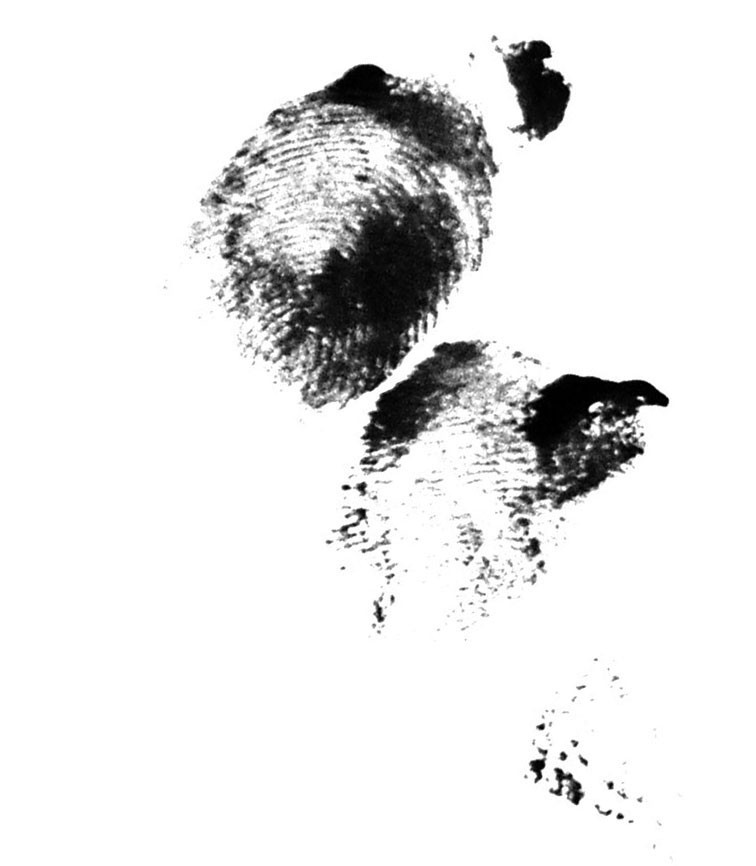
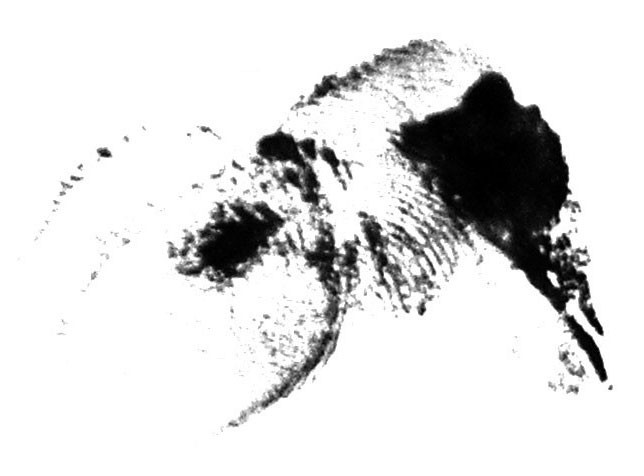
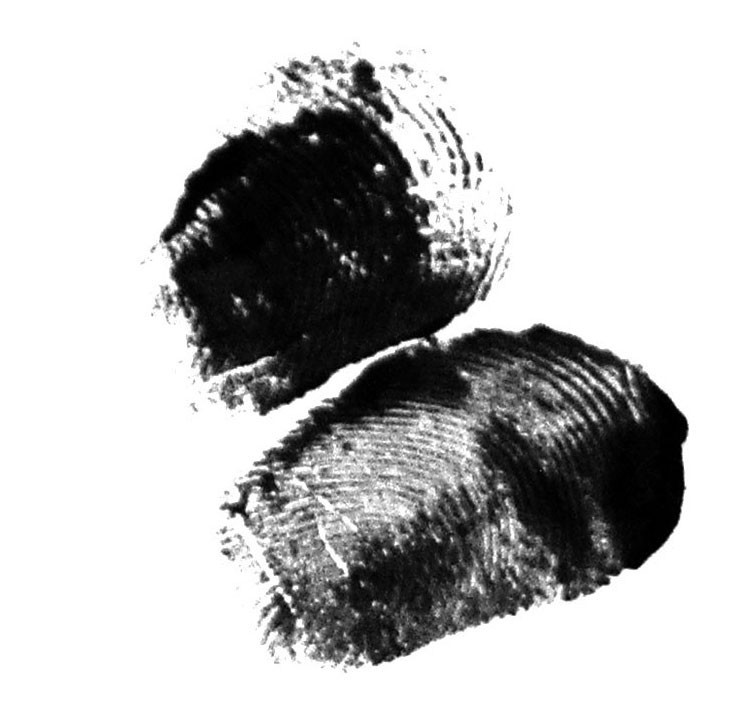
It was clear to me from the start that planning a work for a long-term presence in the art museum meant relating it to the location on multiple levels: to the museum’s architecture, to the museum itself and its employees, and to the history of the city of Stuttgart. The position of the viewer is also very important. The wall in question is extremely long; in many ways, it’s an interface. Standing in front of it, you can look down the corridor to the pedestrian zone, and so a connection between inside and outside is established. The wall also connects the rooms of the permanent collection with the temporary rooms containing smaller exhibitions. And since there are several lines of sight from the exhibition rooms, you’re either standing very close up to the wall or seeing it from a distance; due to the architectural situa-tion, there is no medium distance. For this reason, the piece also has to work from two very different perspectives. As a first step, I wanted to symbolically reveal the visible and invisible labor of the people working at the art museum. This is why I conducted personal conversations with most of the museum’s staff. Later, I used fingerprint powder to make the traces of the hand movements we’d left behind on the wall visible and preserved them. These constitute the first layer of the work. From the museum guards, cleaning team, and security service to the curators and employees from the administration and technical services: everyone’s traces were de-hierarchized and placed side by side, on equal footing.
As a second step, I hung framed charcoal drawings on the resulting mural that focus on gestures of touching and feeling and contain a reference to the history of the city of Stuttgart. These are gestures by people who have often been marginalized, discrim-inated against, or ignored, and are part of Stuttgart’s history in a visible or invisible way.
To my mind, another compelling aspect of this work is how you parse the medium of drawing: not only with an eye to the wall or sheet of paper as image support, but also in terms of the fertile interstice between two-dimensional and room-scale drawing, between the photographic tem-plate and its conversion into drawing, as well as the interactive aspect of a collective laying on of hands and the resulting inscrip-tion into the wall’s surface. Can you talk a bit about why you prefer drawing? What are the challenges of the medium?
For me, I think, drawing is more of an attitude than a medium. First of all, drawing is humble: it doesn’t require much and it’s inexpensive. This is very important for me, because it allows me to make mistakes, explore dead ends, discard things. This gives me a lot of freedom. Since I’ve always traveled widely for my work, there are other, very practical reasons to make murals or room-sized drawings on plastic foil, fabric, or large sheets of paper that can be folded. I often work with banal everyday materials: felt-tipped pens, foil, plastic sheets I can buy in Stuttgart or Lagos, Lima or Rabat. The works either stay where they were made, or they can be transported in a suitcase if necessary. It might seem like a pragmatic decision, but conceptually it’s also very important to me: I like working with a medium that’s modest, nomadic, adaptable, resistant, and sensitive. It’s also important that I use drawing in its full formal range. My drawings can turn out very differently from one another. The work in Stuttgart is a good example: on the one hand, it consists of gesturally expressive collective hand marks, which I of course also regard as drawing; on the other there’s a series of 14 extremely realistic documentary drawings. The formal language of the drawing results from the work’s conception and content. This formal range is very important to me. It might sound banal, but in a fast-paced art market that relies on instant recognizability, this can become a problem. Years ago, I spoke to the Berlin-based drawing artist Nanne Meyer about it. She said to me with a laugh: “Oh, I know that too! At my solo shows, people often ask me who the other participating artists are—they can’t imagine that all these different drawings could come from the same hand.” As a young artist, I found that very liberating.
I’ve called wall works such as Vom Berühren und Begreifen and Les abris curatorial works, because you, the artist, determine the way the work is orchestrated in a given spatial situation. It’s your concept that determines the design of the wall’s surface and the arrangement of the framed drawings. The approach is based on a heightened sensitivity for exhibiting art that’s been around at least since the advent of installation art. Artists’ efforts to use installation to transform the exhibition space and the presentation of their works speak to a tendency to regard the exhibition itself as a creative activity and to critically reflect on the influence the exhibition exerts on the art works. Is this an issue for you? Yes, reflecting on and shaping the relationship my work has to a given space (or to the other works exhibited there) forms an essential part of my artistic practice, but that goes for many artists, of course. For me, this approach of “heightened sensitivity” is a logical extension of the themes I address in my work. It also corresponds to my understanding of art as a tool for potential dialogue. And so I don’t think it’s about control for me, but rather about entering into an active dialogue. It’s obvious that this dialogue is not always going to be agree-able or free of conflict, and of course it doesn’t only depend on me, but also on the institution—and most of all on the viewer.
Floor, ceiling, wall—your works can be found on all three surfaces in a room. Each element carries with it its own intrinsic conditions, which—as we’ve already mentioned regarding the site—encompass planes of meaning in both form and content. If you look at the gender-coded attributions, then a wall as the vertical element generally stands for the masculine. Or the corner, which is particularly appealing to some artists. A number of corner pieces can be found among your site-specific works. In 2008, you presented the piece Pol on the floor, while Flying carpets was drawn on the ceiling. In Mind Map, the corner forms the center of the wall drawing. How do you arrive at your decisions concerning a particular work’s extension into space?
Gender roles and clichés, structural discrimination, racism, and sexism still take up a lot of space in art, to remain with the image. This problem is also reflected in the exhibition architecture and influences the artwork’s placing and the way it’s carried out into the space. A feminist, decolonial stance is clearly discernible in much of my work. From an intersectional perspective, I try to question the assigning of identities in fundamental ways and to deconstruct gender roles. In this vein, there are exhibition situations in which I deliberately take a clear position on the basis of precisely these considerations. The most recent wall drawings from the museum in Nice are a good example of this. I was invited by director Hélène Guenin to relate my work to works from the collection. These are primarily works by male artists and almost exclusively depictions of the female body. I wanted to set something against this “male gaze,” not only in thematic terms, but also using the space; I made a series of large drawings of female or non-binary bodies that are exuberant, erotic, active, at times angry, and in any case full of energy. The drawings, of course, are very large; it was a conscious decision to have them occupy important areas or respond to the key axes of the space. Otherwise, how I extend my work into space often depends on the given situation. I’m drawn to corners because the intersecting axes delineate the space clearly. I’m always interested when drawn space meets real space. This can be seen, for example, in very early works, for instance Flying carpets and Les abris. In Flying carpets, I covered the wall and ceiling of the exhibition space with a fragile web of interwoven carpet structures that were distorted in perspective. The drawings, however, are positioned in such a way that it’s difficult to see them through the large storefront windows from the outside. At first glance, the exhibition space looks empty. If you peer into the gallery from the street, all you can see are the visitors inside, moving around the room with their chins raised—you only find out why when you enter the building.
In Les abris I confront the architecture of the wall drawing with the real architecture of the exhibition space and all those elements that tend to be left out, e.g. the stairs, railings, doors. In the photo series Anywhere I lay my head, which is hanging on the mural, these two spatial systems are juxtaposed with an additional, social dimension of space: the series documents dwellings and hiding places of homeless people and their attempts to create a private area in public space. There are also works like Mind Map, in which I play with an apparent symmetry. The two touching walls seem to mirror one another, but in fact do not. The mural À l’interface, created in Rabat, works in a similar way: a photograph of the border fences in Melilla, the Spanish enclave in northern Morocco, is juxtaposed with a twelfth-century map of the world by the Arab cartographer Al Idrissi, in which south is above and north is below.
You’ve just addressed another important theme in your art: working in non-European contexts. You’ve produced many of your pieces during your travels and stays abroad. They home in on topics intrinsic to the respective culture, whereas as a European artist, you approach your position in a very reflective way, inquiring into and picking apart entrenched Euro-centric perspectives. Perhaps you could elaborate a bit on the works World Wide Praying Directions and In God We Trust? They’re also good examples for your working process because they’re interconnected. You tend to use many of these narrative strands in a number of works, carrying them further or slightly altering them. For example, the drawing of the Destiny bus from Lagos reemerges two years later in large format on wallpaper.
World Wide Praying Directions is a nice example because it’s an incredibly simple piece. It consists of a drawn map of the world with prayer directions for the three monotheistic religions, supplemented by stenciled marks on the floor pointing in these directions. Depending on whether I apply the marks in Dakar, Lima, or Brisbane, the relationship between the three arrows changes, because while Christian churches face east, in synagogues people pray facing Jerusalem and in mosques facing Mecca. Beyond the concrete ritual of prayer, I am more concerned with addressing the symbolic shift in perspective. Depending on where you’re looking from, things appear different, and they transform with every step. Of course, the fact that my German passport offers me the opportunity to change my perspective is a sign of my privileged situation. And so the imbalance is there even before I start working. I can’t make up for that, but I can at least reflect on it while I’m working. This means that projects such as this one, or In God We Trust or Curtains (your miracle awaits you), both of which were realized in Lagos, are very modest, discrete, often temporary interventions that try to fit into the local context, sometimes to the point that they’re overlooked. The works were created as part of a project in Nigeria that examined religiosity and spirituality in public space. Over a period of several weeks, I collected the sayings that adorn the backs of buses in Lagos, some of which are poetic and some of which are martial. I then drew some of these onto fabric, which I made curtains from for a small church that served as a studio for the participating artists. It was one of the few places that offered people at least some rest and protection. And there were fans! Many people came to church to pray, but also to catch their breath, chat with their neighbors, sometimes even to take a nap. And since there were no curtains or window panes, I sewed curtains to at least symbolically separate the indoor and outdoor space. And yes, narrative threads and themes recur frequently. The Destiny bus was created as part of a group exhibition in Hamburg in an empty building that had previously been used by various cultural groups. The room had been used by a religious community whose members had come to Germany from West African countries. The wallpaper was from them; the congregation used to look at this photo wallpaper during the services. I thought it would be a good place to have the bus reappear, but at the same time I wanted to find a form in which the history of the space remained visible.
I’d like to return to your work in public space. Can you introduce us to a few of the approaches you’ve taken? As a context, public space is completely different from the inside of a museum, especially with a view to the reception. Your work Last three cars to Poppenbüttel, for instance, makes skillful use of the conditions of public space, such as wheatpasting posters on sites usually reserved for advertising, in other words for consumer-oriented images.
In terms of my way of working, the two contexts don’t actually differ all that much and the boundaries are often fluid. Some of my graffiti works were created outdoors but then became part of an indoor installation, such as Lèvre je te baise encore, a graffito that quotes a line of poetry by the French artist Aurelie Nemours. I sprayed the lines on the facade of the museum in Mouans Sartoux, but then they also appear within the exhibition in the form of a photograph in the site-specific mural Dadamaino’s secret garden.
Other graffiti works are there and will remain where they were created, such as Petites corrections de mon environnement. Here, the intervention consisted of a minimal gesture, the “correction” of a pro-Le Pen graffiti found on site. But if you draw the connection between the work in Stuttgart and an early work in public space in Hamburg, you start to notice thematic and conceptual parallels. In 2010, for Last three cars to Poppenbüttel, I drew over a long period of time in the stations of the elevated No. 3 train, which cuts through the city from north to south. If you study the shops, snack bars, and cafes, but also the graffiti, posters, and stickers in the entrance areas of the various stations, you can learn a lot about the city, about diversity and gentrification, economic and social inequality, and cultural diversity. I particularly enjoyed drawing at the stations. In a certain sense, they’re often non-places, and there’s a lot to discover there: run-down cellphone stores, darkened bars, ads for buying dental gold, leaflets in all kinds of languages, racist and sexist doodles. It says a lot about the balance of power in a city when you look at who’s visible and who’s not visible in public space, and where. A series of risographs resulted from the drawings, which in turn were posted in public space as paid adverts, but also illegally. The entrance area of the Kunstverein Harburger Bahnhof, which is located in the station building, was also filled with them. Posters were also on display inside, so that visitors could take a copy free of charge. It was important to me that key parts of the project in public space were accessible to everyone and not just an audience interested in art, especially in parts of the city that are often labelled “problematic” even as they’re subjected to intense gentrification.So the work wasn’t just aimed at a single audience, but at many different audiences. At the same time, I consciously gave up control over its placement, reception, or the duration of its visibility. I wanted to subject the drawings to the same mechanisms that all other visual material in public space is subjected to. I accepted that they’d be overlooked or not perceived as art. And so the images of the city were fed back into the city in several ways, coming, in a certain sense, full circle.
Language and sign systems also play an important role in your work. Sometimes it seems to me that the white walls function as empty pages of a book for you.
Yes, that’s right, writing and language play a very important role, this becomes clear from the poster piece in Hamburg, which works a lot with writing. That has to do with the fact that I didn’t only study art, but also literature, and later I did my doctorate in art studies on the relationship between text and image in contemporary art. Writing and drawing are two gestures that are very close together, also etymologically. But I think what’s more important is that I’m basically interested in how visual and verbal sign systems work, how meanings and codes shift according to different cultural contexts. Because of the many times I’ve stayed in non-European countries, the political dimension of language became increasingly important to me. Since I live in France most of the year, struggling with language and the shifts and gaps that arise through translation is a day-to-day thing. At home, we speak a mishmash of French, German, and Arabic. This is also reflected in many of my works, of course. One example is Einigkeit, Recht, Freiheit, which I had initially developed for the front window of the Städtische Galerie in Kirchheim and then made a variation of for a showcase in the Frankfurter Kunstverein, painting the inside of three storefront windows with white paint, as people often do during renovation work. Then I scratched an Arabic word into the paint in each of the windows so that you could see through the words from the outside in and from the inside out. It rapidly caused quite a stir: had the Städtische Galerie turned into a Muslim cultural center or even a mosque? The exclusive and inclusive power of language made everyday racism and fears of foreign infiltration visible. Incidentally, the three words were “unity,” “justice,” and “freedom.”
The last question has to do with a wish. Is there a place where you’ve always wanted to do a work, one especially for this particular place, but have not yet gotten around to it?In times of closed art institutions and an increasing precariousness in the livelihoods of artists and creatives, my greatest wish is simply to be able to work at all.
Anne Vieth is director of the Mercedes-Benz Art Collection since 2023, From 2017 to 2023 she has been curator at the Kunstmuseum Stuttgart.
Published in: You are here, Distanz Berlin, 2021
RESTER POREUSE
Hélène Guenin en conversation avec Katrin Ströbel
Artiste, chercheuse et enseignante, Katrin Ströbel pratique le dessin, souvent in situ, en dialogue avec le contexte (urbain, géographique ou social), selon une approche féministe et inclusive. Tout en abordant ses recherches théoriques, cet entretien porte sur sa pratique artistique, qui interroge notamment les capacités de visibilité et d’autonomie du dessin en posant un regard critique sur le contexte artistique.
Hélène Guenin : Ce qui me frappe chaque fois que je regarde ton travail et les contextes de tes interventions, c’est le mode d’apparaître et d’être de tes dessins qui relève d’une logique de contamination : porosité et contamination des images détournées, qui génèrent des chimères ; contamination des espaces, au coeur des institutions ou dans l’espace public ; contamination des rapports sociaux ou de genre qui infuse ta méthode de travail et d’interaction avec les contextes. J’emploie ce terme de contamination en pensant à Anna L. Tsing et son formidable ouvrage, Proliférations [Wildproject, 2022]. Elle parle du vivant – depuis sa position d’anthropologue – et se penche sur les phénomènes d’instabilité dans les écosystèmes. Comment l’intrus, le transfert ou l’espèce compagne peuvent contaminer un milieu, rompre l’équilibre ? Cela comporte bien sûr la dimension inquiétante d’une menace et d’une domination prédatrice dans le contexte des écosystèmes, mais Tsing met aussi en avant la notion de résurgence. La résurgence est ce qui jaillit des dynamiques interespèces, qui, par leurs enchevêtrement et coexistence, créent des alliances nouvelles et des milieux propices à la vie. Je suis sans doute partie très loin avec cette lecture qui me hante, mais je vois, dans ces mécanismes duels de la prolifération et de la résurgence, une dynamique et une position qui me rappellent ta pratique. Il y a quelque chose dans ton travail de l’ordre du pirate et du trait d’union, de l’implosion et du soin, de la rupture et de la suture. Et tout cela avec des outils d’une grande modestie : le crayon, l’acrylique ou le ciseau. Cette analogie résonne-t-elle en toi et peux-tu évoquer ton approche, ta méthodologie ?
Katrin Ströbel : Pour moi, l’instabilité et la porosité ne sont pas des termes qui ont une connotation négative. En tant qu’artiste, je veux être poreuse dans mes relations avec ce qui m’entoure. Je veux infiltrer et être infiltrée. Si je devais trouver une définition qui corresponde à ma position d’artiste, ce serait la suivante : être fait partie de l’ensemble ; être au sein du fourmillement plutôt qu’à distance et au calme dans mon atelier. Pareil pour l’instabilité : je veux être instable, c’est-à-dire en mouvement, en mutation, en transformation, même si ce n’est pas toujours agréable et si l’équilibrage demande souvent force et énergie. Le fait d’être au coeur de l’action n’est pas non plus uniquement positif. Être au milieu signifie aussi être au sein de structures toxiques, être exposée aux systèmes de pouvoir dominants, etc. Et c’est là que l’idée de profilage et de résurgence entre complètement en jeu, notamment dans et par le travail artistique : semer des troubles visuels, poser des questions, créer des images autres et les insérer dans les systèmes, multiplier les graines… La modestie dont tu parles est basée sur mon positionnement artistique et une grande liberté dans l’utilisation des matériaux quotidiens, polyvalents et abordables, comme un simple crayon ou un marqueur ; c’est vraiment un choix conceptuel. Mais elle est aussi liée au dessin, qui est très humble. J’aime le fait que sa force subversive et émancipatrice soit souvent sous-estimée. Le dessin est un excellent cheval de Troie !
H. G. : Ton projet au Kunstmuseum de Stuttgart me semble relever de cette « méthodologie » que j’évoquais : dans ce lieu qui célèbre les grands maîtres de l’avant-garde allemande, tu as introduit – à travers quatorze dessins de gestes – une multiplicité de récits du XXIe et d XXe siècle. Ces gestes font jaillir une histoire des marges et des « invisibles », une histoire aussi de la violence jugulée par le poids du silence. À ces dessins, tu as ajouté la trace tangible et anonyme de toutes les personnes oeuvrant dans le musée. Une trace très incarnée, chargée, puisqu’elle se matérialise par des empreintes de doigts noires qui hantent toute la longueur du mur. Comme des taches, voire des souillures, des écritures laborieuses sur une surface immaculée dévolue à l’art. Ce choix fait en plein coeur de la pandémie, alors que toute forme de toucher était bannie, est très fort. Cela joue à la fois sur une forme de contamination du récit du musée – nourri par des discours invisibles – et sur un principe de révélation, de dévoilement sensible, troublant et charnel. Peux-tu décrire ce projet et cette mise en dialogue de ces registres d’histoires imbriquées ?
K. S. : Vom Berühren und Begreifen [1] (2021) était une commande du Kunstmuseum à la suite d’un prix que j’ai reçu en 2019 [prix Hans-Molfenter]. Ulrike Groos, la directrice du musée, connaissait mes dessins muraux, mes travaux in situ et le rapport que je développe dans bon nombre de mes oeuvres avec le lieu de présentation et son histoire institutionnelle. Elle m’a donc invitée à élaborer un travail sur un mur de 25 mètres de long, au rez-de-chaussée du musée, reliant les salles d’exposition à l’entrée, qui est un point névralgique du bâtiment. J’ai réagi à ce lieu avec un dessin mural in situ, collectif et gestuel, ainsi qu’avec quatorze dessins à l’aquarelle et au fusain. Cette pièce réunit différentes approches du dessin et les oppose délibérément les unes aux autres. En pleine pandémie, j’ai convié les personnels du musée à converser avec moi sur les gestes quotidiens qu’ils réalisent avec leurs mains. Je les ai rencontré·es les un·es après les autres. Pendant ces discussions, nos doigts tâtonnaient sur le mur, le touchaient. Ensuite, j’ai rendu ces traces visibles avec une poudre d’empreinte. Ce dessin collectif, qui peut, au premier regard, être perçu comme souillure ou saleté est en fait le portrait de l’équipe du Kunstmuseum. Les traces du personnel de sécurité ou de l’équipe de ménage y sont égales à celles des techniciens, des commissaires d’exposition ou de la directrice. Le dessin collectif déhiérarchise – en tout cas au niveau visuel – les structures institutionnelles. Il rend visibles les traces de toutes ces mains qui, souvent ignorées, invisibilisées, permettent au musée de fonctionner. Le potentiel symbolique des gestes de la main est également le sujet des dessins encadrés, placés sur le mur par groupes thématiques. Ces dessins au fusain reproduisent des gestes basés sur des événements historiques ou sur des oeuvres de la collection. Ils sont tous accompagnés d’un bref commentaire manuscrit permettant de situer l’image. J’y représente des personnes considérées comme minoritaires, souvent marginalisées, peu ou pas visibles, et dont les activités sont pourtant inscrites de multiples façons dans l’histoire de la ville : des immigré·es, des femmes, des habitant·es juif·ves de Stuttgart, des soldats africains qui ont libéré la ville en 1945, etc. J’ai procédé de la même manière avec la collection du musée. Par exemple, l’un des dessins encadrés est une femmage à Romane Holderried-Kaesdorf, une artiste qui n’a pas du tout eu la visibilité qu’elle aurait méritée. J’ai réalisé une copie d’un de ses dessins qui fait partie de la collection. En 1985, elle a reçu le même prix que moi, mais, bien qu’elle ait été l’une des rares femmes à l’avoir obtenu jusqu’à présent, elle n’apparaît toujours pas dans la liste officielle des lauréat·es. Comme tu le dis, le dessin contamine l’architecture et le récit du lieu. Il est ici un moyen de communication, d’expression collective, de reflet historique et de réflexion critique.
H. G. : Cette incarnation du dessin, cette dimension charnelle mais aussi trouble, tu les as expérimentées dans le contexte de l’espace public – je pense notamment à ton projet à Fribourg et cette phrase déployée sur les colonnes Morris, Today I Lick the Skin of the World [2], ou ces dessins de mains qui s’entremêlent. Tu interviens alors en plein contexte pandémique – dans un moment où l’autre est envisagé sous une forme étendue : celle de ses fluides, de ses miasmes et de leur capacité à nous affecter et nous pénétrer. Une forme étendue mais aussi rejetée de l’altérité. Tu choisis en retour de t’illimiter, d’embrasser le monde, de t’abstraire de cette dimension hygiéniste et même de l’emplir d’une charge érotique. Il y a là de l’in-domination et de l’indiscipline. Comment as-tu abordé ce rapport à l’espace public ? Pourquoi ce passage à l’écriture ? Quelle était ton intention ?
K. S. : La plupart de mes projets de dessin commencent ou se terminent dans l’espace public, notamment urbain ; c’est un espace de travail, d’inspiration et de réflexion pour moi. Nous le partageons tous·tes, il nous relie, même quand il est violent ou hostile. Travailler dans l’espace public me permet d’apprendre beaucoup de choses sur une société – politiquement, culturellement, socialement. Pour qui est-il construit ? Qui s’y sent libre ? Qui en est exclu ? Qui est visible et de quelle manière ? Observer l’espace public durant la pandémie était une bonne stratégie pour comprendre la situation. Les surfaces de toutes sortes sont devenues des zones à problèmes : les murs, les poignées, les portes, même l’espace public en lui-même. Il y avait une analogie frappante entre la peau du monde et nos propres peaux, notre organe le plus grand, l’interface qui nous relie à l’extérieur, à l’autre et aux corps des autres. Dans mon travail, je m’intéresse toujours à la manière dont le corps et l’espace se définissent et se conditionnent mutuellement. À Fribourg, je voulais proposer un geste doux et subversif qui relie à nouveau le corps et l’espace, également dans sa dimension sensuelle et érotique. Sur ce fond, la tendresse et la fragilité d’un simple trait dessiné ou d’un geste d’écriture manuelle qui ne correspond pas du tout aux lois visuelles de signalétique ou aux mécanismes de publicité me semblaient justes.
H. G. : Sur une dynamique similaire à celle du Kunstmuseum, je vous ai invitées, Aïcha Hamu et toi, pour une carte blanche lors d’un accrochage de collection tout en tension au Mamac, à Nice [3]. Il y était question de male gaze [4], que ce soit les tableaux vivants de Pierre Klossowski ou les portraits d’un « éternel féminin » de Julião Sarmento. Les oeuvres rassemblées dans la salle entremêlaient des histoires de regards, de désirs, de corps érotisés ou suggérés, de fétichisme et aussi de voyeurisme. En 1975, dans son article « Visual Pleasure and Narrative Cinema [5] », Laura Mulvey introduisait ce concept, mettant en exergue une culture visuelle dominante façonnée par la vision masculine et hétérosexuelle, produisant, au-delà des stéréotypes, une iconographie du corps féminin morcelé et érotisé, des visions fantasmatiques. L’enjeu était de proposer des contre-récits. Tu avais, pour ta part, rassemblé les visages statufiés de ta série Les Confiné·es (2020) ; un hermaphrodite solaire ; de puissantes rondes extatiques de corps et de feuillages entremêlés, mais aussi des collages très batailliens. Plusieurs interventions étaient faites à même le mur, sur la « peau » du musée. Comment as-tu choisi ces oeuvres ? Peux-tu revenir en particulier sur … and then we started a revolution of desire [6] (2021) ?
K. S. : Ton invitation m’a fait particulièrement plaisir. D’une part, parce que tu m’as proposé de travailler de manière dialogique et que la discussion, la recherche et la sélection communes autour des diverses positions ont constitué une partie centrale du processus de travail. D’autre part, parce que tu étais prête, en tant que directrice du musée, à porter un regard critique sur la collection et sur l’institution elles-mêmes, ce qui est tout sauf évident ! Pour moi, il s’agissait de critiquer une représentation dominante du corps féminin. Mais ce qui était encore plus important, c’était effectivement de créer une iconographie différente. Non pas seulement proposer une autre image du corps, mais un grand nombre d’images du corps possibles (ou impossibles), d’autres corps avec toute leur énergie, leur force et aussi leur plaisir et leur puissance sexuels. Mon but était de les opposer aux images qui existent ou, mieux encore, de les submerger. Il me semble utile de revenir sur les notions de contamination et de prolifération que nous avons évoquées. Ces dernières années, j’ai réalisé de nombreux dessins représentant des corps féminins ou hybrides. Souvent les gens pensent que je les dessine pour me confronter au corps féminin, mais ce n’est que partiellement vrai. C’est surtout pour que d’autres se confrontent à de nouvelles images du corps (féminin) ! Il s’agit d’infiltrer un système de représentations, de produire et d’injecter des images inhabituelles pour changer les rapports de force au sein de ce système. … and then we started a revolution of desire en est certainement un bon exemple. Le dessin mural, presque baroque, n’a rien d’agressif, mais il accueille les visiteur·ses de plein fouet et les confronte, avant qu’iels ne puissent se consacrer aux autres oeuvres de la salle, à une pelote débordante de plantes et de corps enlacés indéfinissables. Le dessin ne donne pas de leçon, mais il déstabilise notre regard normé et nos attentes.
H. G. : Je voudrais revenir sur la série Les Confiné·es, conçue dans un contexte très particulier, celui de la première vague de pandémie due au Covid-19. Cette série me semble très évocatrice d’une génération d’artistes femmes qui, à l’instar de Hannah Höch, ont investi ce médium et cette hybridation des régimes d’images. Peux-tu nous en parler ? Cette généalogie fait-elle sens pour toi ? Comment te positionnes-tu en regard de leurs démarche et formes d’engagements ? Je pense également à ton installation I do not come alone7 (2022) qui réunit une famille d’élection, une sororité, une parenté politique que tu peux peut-être partager avec nous.
K. S. : J’ai réalisé Becoming sculpture. Undoing sculpture. (Les Confiné·es) [8], une série de 40 collages, au cours des deux mois de la première période du confinement en 2020. Pendant ce moment très difficile, on nous a en quelque sorte imposé de devenir des sculptures, mais nous sommes en majorité peu doué·es pour ça. Les collages parlaient de cette situation particulièrement violente, de nos souffrances, de notre solitude, de notre colère, mais aussi d’empathie, de solidarité et de résistance. Nos vies semblaient totalement fragmentées et morcelées, et le collage résonnait bien avec cet état du monde. Conceptuellement, ça m’a plu que mon choix de médium reflète la situation du travail en tant qu’artiste. Il fallait créer avec ce qui traînait à la maison : des vieux livres ramassés dans la rue, des journaux, de la publicité, du papier recyclé… Hannah Höch est une artiste majeure pour moi. Dans son œuvre, elle allait beaucoup plus loin que ses collègues dadaïstes. Ses collages restent d’une actualité frappante. Mais elle est aussi importante comme modèle, car son chemin n’a pas été facile. Devenir artiste fut une véritable lutte pour elle, et défendre sa position à côté de Raoul Hausmann et des autres artistes fut ardu. Sur ce fond, je m’inscris effectivement dans une lignée d’artistes femmes, mais également dans une pensée de sororité et de solidarité, ce que bell hooks appelle les « circles of love» [9]. On peut faire le lien avec I do not come alone, un projet de dessin en cours qui réunit des portraits de femmes importantes dans ma vie et qui ont fait celle que je suis aujourd’hui, des artistes, théoriciennes, écrivaines, mais aussi des femmes de ma famille, mes amies ou bien les héroïnes de mon enfance.
H. G. : J’aimerais évoquer un projet que tu as mené à terme dans l’espace public à Marseille et grâce à Ideal artspace à Leipzig sur des panneaux d’affichage urbain [17 novembre-7 décembre 2022]. S’y superposent d’habitude affiches promotionnelles ou électorales, parfois graffitis. Donna Haraway parle du devoir d’« habiter les espaces méprisés10 », et il y a, me semble-t-il, quelque chose de cet ordre dans ce choix que tu as fait d’intervenir sur des surfaces à la fois très visibles et non regardées, sans noblesse d’une certaine manière, car théâtre d’une impermanence et de jeux de superpositions et d’arrachements. Ces panneaux invitent à la « libre expression », et tu as décidé d’y ajouter, jour après jour, de discrètes figures arborant de grandes banderoles vierges de tout message. La pluralité des visages convoque autant de périodes et de géographies, réunissant une impossible « Internationale » de la lutte et de la liberté. La diversité muette de ces combats que l’on devine prend aussi une dimension particulière dans le contexte actuel : à l’automne 2022, nous avons vu circuler de nombreuses images de jeunes Chinoises brandissant des feuilles blanches. Nombre d’entre elles ont été arrêtées, symboles de la censure ultime et de la puissance qu’il y a à brandir un support, même sans message, dans l’espace public. Peux-tu revenir sur le contexte de ces interventions, le choix du mode d’apparition et de cette polyphonie muette ?
K. S. : Ein Heer aus Wut und Wünschen11 (2022) est un bon exemple pour clore notre échange. On y retrouve de nombreux aspects dont nous avons parlé et qui sont importants pour moi : ma perception du dessin comme médium de résistance – un médium qui n’a pas peur de la fragilité et qui la détourne en force subversive. Ensuite, mon intérêt pour la construction des espaces publics, mes convictions politiques et mon positionnement en tant qu’artiste. Lorsque j’ai collé les affiches de dessins de manifestantes, je m’attendais à ce qu’elles soient recouvertes ou barbouillées rapidement, d’autant plus que les panneaux et banderoles vierges invitent au passage à l’acte. Mais, à ma surprise, les passant·es ont plutôt pris soin de mes dessins. Quand d’autres affiches ont été collées sur ces derniers, j’ai constaté que les gens ont souvent essayé d’enlever avec précaution la couche supérieure afin de faire réapparaître les femmes. Il s’agit donc en effet d’une façon de s’approprier ou d’habiter les « espaces méprisés », même si ce n’est pas évident ou peu visible. Mais j’aime cette analogie entre la lutte quotidienne pour la visibilité dans la jungle de l’affichage sauvage et la lutte pour la visibilité des manifestantes et de leurs droits. L’apparence silencieuse de l’oeuvre s’oppose à l’économie de l’attention et permet de vraiment regarder ces femmes. Chaque manifestante qui s’ajoute déplace le cadre d’interprétation et le modifie à nouveau. Ein Heer aus Wut und Wünschen n’est pas stable, c’est un travail qui change et se transforme en permanence avec le temps, avec les lieux respectifs – Leipzig et Marseille – et avec la situation de celleux qui le regardent. Le moment de résistance et de solidarité prend le pas sur les revendications individuelles.
Hélène Guenin est directrice de la Fondation Yves Klein. Entre 2016 et 2025, elle était directrice du Mamac, à Nice. Auparavant, elle a été responsable de la programmation du Centre Pompidou-Metz.
1. « Toucher et comprendre ».
2. « Aujourd’hui je lèche la peau du monde ».
3. Musée d’art moderne et d’Art contemporain, Histoire.s de l’oeil* / Accrochage des collections, 19 mai 2021-19 juin 2022.
4. « Regard masculin ».
5. Publié dans la revue britannique Screen. Disponible en ligne, trad. française de Gabrielle Hardy : debordements.fr/Plaisir-visuel-et-cinema-narratif.
6. « … et ensuite nous avons commencé une révolution du désir ».
7. « Je ne viens pas seule ».
8. « Devenir sculpture. Défaire la sculpture ».
9. « Cercles d’amour ». Voir Communion: The Female Search for Love, New York, HarperCollins, 2002.
10. « A Cyborg Manifesto », The Berkeley Socialist Review Collective, 1985. Manifeste cyborg et autres essais, Paris, EXILS, 2007, trad. de Nathalie Magnan.
11. « Une armée de rage et de désirs ».
Published in: Roven Revue No 17, Paris, 2023
VARIATIONS ON THE DRAWN – NOTES ON THE WORK OF KATRIN STRöBEL
Katrin Ströbel’s art is not l’art pour l’art. Her works are shaped by a sociocritical perspective of a world in which turbo-capitalism is on the rise and shows no regard for social justice. Among the multifaceted topics the artist has dedicated her work to are Eurocentrism, colonialism, racism, feminism, and migration. The techniques and genres in which she moves are as complex as the content of the works themselves. Installation, video, photography, performance—Katrin Ströbel is a virtuoso in many different fields of contemporary media. Her sojourns abroad in numerous countries on different continents have supplied her with an international network that has influenced her world experience and the questions she poses in her work. Thus, it’s remarkable that such a globally active, versatile artist continues to regard the most intimate, most basic art genre—drawing— as the one that underpins her work and shapes it most profoundly. And despite every paradigm shift that the concept of drawing has undergone since the 1960s, it’s the basic elements of this genre that are called for here: clusters of lines and paper. In 2010, Katrin Ströbel described drawing as an intimate act in which she had to be alone—especially when she was in the process of searching or trying things out.(1) At the same time, drawing—like writing—is flexible and can be used in a wide variety of ways, due to its mobility and range of media. Another element that plays a key role in her art is the word, both seen and read. Some of the works from 2015–2018 illustrate that an individually implemented technique—the medium of mark-making, the line, the image support—is itself an essential expressive conveyor of a work’s respective content.
Finger Drawing, Archaic
Formally, Ströbel’s calculated handling of drawing’s basic expressive elements reflects the content; this becomes apparent in the work on paper titled Gimme Shelter from 2016: broad, transparent brushstrokes in gray fill the paper with the artist’s rapid gestures, and against this background, Ströbel scrawled the words “Gimme Shelter” with a finger in wet paint—“Give me protection, give me a place to stay, give me a roof over my head!” The association that comes to mind is that of a refugee’s cry for help, written in sand, dust, or onto a foggy pane of glass, appeals that can be erased with a light swipe—a message written with a finger into whatever’s at hand due to the unavailability of other material. The aesthetic effect corresponds to drawing’s most archaic and direct form: script, in this case printed on paper using the monotype method. The words emanating out from the painted paper background clearly illustrate their content: the way in which the letters are inscribed on the background and are also contained by it suggests a protective human environment. The relationship between line and surface corresponds to the spatial notion of a physical state which the work powerfully calls for in colloquial, transient, hectic English.
Ink, Light, and Shadow
In 2015, in a seemingly “classic” ink technique, Ströbel used permanent markers to draw cityscapes of Casablanca on paper, which she folded in a regular pattern. The grid of creases in Casablanca décalé (Shifted Casablanca) covers the images and lends the drawings signs of wear, recalling the way folded city maps appear when opened up. The view is from above, looking down at the architecture, and extends across two sheets of paper in the manner of a panorama. Among the spread of towering masses of concrete, humans disappear into a metropolis of their own making—in the areas drawn in black that define the picture. Dark shadows that seem to swallow the residents create an impression of a city bathed in glaring sunlight with apparently haphazard clusters of buildings. Black and white delineate a broad architectural expanse that burns itself onto the retina in a surreal impression, like an overexposed photographic negative. On the folding screen Belsunce, Saint-Saëns from 2017, this form of drawing is extended into the space. Here, the vertical sections of the screen correspond to the cubic towers of the Tours Labourdette, built in the early 1960s in Marseille’s city center. Irregular ink shapes give the shaded apartments behind the stacked high-rise balconies a hint of caves, a monotonous uniformity in which people are expected to spend their lives in contentment and self-respect. Once the epitome of social housing and intended as an affordable and dignified form of coexistence for a large number of residents in a confined space, the high contrast cropped ink drawing conveys an endless image of a dystopian experience of living machines, the excessive proliferation of which illustrates their humanitarian emptiness. The only person portrayed in this architectural anonymity appears vividly on the reverse side of the screen—in the form of a photograph printed on a dress draped over the screen. From here, through a curtain, a man skeptically gazes down at the street below. Both cunning and ironic, the printed garment points to the original function of the folded screen: to partition a room to offer privacy while changing clothes.
Line, Writing, Sketch
The kinship between drawing and writing is essential to Katrin Ströbel’s art; she has investigated it scientifically.(2) Visual and verbal sign systems figure in many of her works. In this vein, Making love to unknown cities from 2018 is an outstanding intermedia work; in it, Katrin Ströbel has digitally transferred a conceptual sketch containing words written with a sharp pencil onto fabric and expanded it into a reading performance. Drawing and thinking become clothing; what has arisen in the invisible unconscious is transformed into the artist’s external appearance via the visible line. The work is once again characterized by a contrast between black and white, which is reflected both in the two-piece reversible-wear overalls and in the various printed images in black on white and white on black. Writing and image address various public spaces in numerous cities on different continents as well as their social and cultural influences on the role of women. Diary-like notes, personal experiences with travel and space, and the resulting observations overlap with sketched city views and building facades: “Nothing touches itself / nobody touches themselves / nobody touches me.” Writing and drawing merge to form a visual stream of consciousness that can be deciphered in detail as well as heard in a performance or seen in all its linear chaos. In the work, the fine line in a written system, as a memory sketch or as a means of emotional expression, becomes the artist’s second skin.
Drawing, Space, Body
An important element in Katrin Ströbel’s drawings are the image supports. In addition to the paper typical for traditional drawing, which continues to carry through the artist’s work as a leitmotif, she uses a wide variety of materials. Again and again—and especially in the works with feminist and anti-colonialist content—she expands the drawing plastically and spatially, sometimes (as in the above-mentioned work Making love to unknown cities) with her own body. The confusing spatial impression in the drawing on a folding mirror titled Reversion (2015/16) is particularly remarkable. Viewers are confronted with the life-sized figure of a young nude indigenous woman, drawn in delicate contours on a white background and looking them straight in the eye. Her gaze is serious and expresses sadness, anger, and subjugation; her hands cover her genitals—the motif was taken from a book from the colonial era. Gazing at her, one sees oneself in her figure, takes on her form, and suddenly finds oneself situated between the viewing self and the person being observed. In a surreal reversal, viewers merge with the drawing, which pulls them into a virtual space and devours them in its image. This is very similar to how the artist is swallowed up by her own lines, which she drew on the walls for Wandelnde Blätter (Gespenstschrecken) and other failed attempts of cultural appropriation (2018) and had her picture taken in front of, wrapped in a traditional Moroccan robe with the same interweaving line pattern. An African shield of zebra skin inspired the work; nature created the lines on this extraordinary wild animal. In an ironic appropriation of its fur, Katrin Ströbel creates a mimesis of the self and its drawn surroundings, which of course will never be completely successful. And in the thematic context of cultural “appropriation,” the extraordinary zebra skin also plays a particularly subtle role, since its “camouflage” in nature constitutes a visual conspicuousness far more than an optical cover-up. Indeed, the oscillating effect of the stripes is primarily intended to protect the animal against the disease-transmitting stings of the tsetse fly, which are visually irritated by the pattern. Today, even domestic horses are protected from horse flies with zebra-patterned blankets. Shame be to him who thinks evil of mimicry? In any case, Katrin Ströbel not only extends her drawing into space, but immerses herself in it in such a way that work, space, and artist merge in a shimmering apparition of lines, an absurd symbol of cultural assimilation in which the individual disappears. Assimilation—and drawing—devours its own children.
Dorit Schäfer studied art history, archaeology, and French literature in Heidelberg and London. Since 1998, she is curator at the Staatliche Kunsthalle Karlsruhe, where she became head of the graphic collection (Kupferstichkabinett) in 2003. Her main focus is on French art of the 18th–20th century and on contemporary drawing and prints.
1. Petra von Olschowski proudly presents: Suzie Wong meets Becky Thatcher. Sieben Räume von Dorothea Schulz und Katrin Ströbel, exh. cat., Städtische Galerie Offenburg, Freiburg 2010, p. 58.
2. Katrin Ströbel, Wortreiche Bilder. Zum Verhältnis von Text und Bild in der zeitgenössischen Kunst, Bielefeld 2013.
Published in: Making Love to Unknown Cities, Distanz Berlin, 2020
BODIES AS ARCHIVES – KATRIN STRöBEL’S BODY POLITICS
In the early twenties Hannah Höch started producing her first photomontages, which aimed at developing a different representation of women. She mixed western and non-western iconographic sources. Long before the first feminist protests of the late sixties, Hannah Höch created images that were critical of the traditional patriarchal and colonial iconography. In 2016, Katrin Ströbel began a series of collages entitled Body Politics. These works (collages and drawings) feature “political bodies,” acting bodies, bodies at work. The artist selected representations of active women from an atlas of images that she has been putting together for several years: demonstrators, researchers, laborers, etc. The photographic images are cut, placed in the space of the sheet, composed and augmented by drawings. For instance a group of women from Siberia demonstrating in the late fifties, with a placard in the forefront displaying, rather than a portrait of Lenin, a part of a woman’s nude body. The look on the face of the women who are demonstrating, somewhere between pride, embarrassment and disapproval, transforms the original meaning of the picture. The same happens with the two women researchers/scientists dressed in white lab coats. The photograph is taken in a library, a place for research and knowledge. Their action is prolonged by a sketch of a male nude body placed on a bed of flowers and fur. It is a sketch of the Barberini Faun, made from the sculpture of a sleeping satyr. The two women are examining and commenting the genitals of this mythological creature which has become the object of their study. Here the patriarchal (medical) iconography is totally reversed. Two long arms covered with flower motifs protect a virile torso sculpted in stone. The notions of care, vulnerability, empathy and power are thus being challenged. The pictures are used by the artist as raw material that she fashions, transforms and augments in such a way as to think out, and dress the wounds, of a hierarchized and oppressive system of representation. Here Katrin Ströbel falls within the scope of the legacy left us by numerous proto-feminist, feminist and post-feminist women artists. An artistic and political legacy aiming at an ambiguous and complex representation of women, rid of stereotypes and assignations. On the pretext of tradition and history, artists who contribute to the reproduction of these stereotypes perpetuate symbolic violence and contempt as well as dangerous mechanisms of domination. Concerning this, Paul B. Preciado considers “the body as a living political archive, a historical reservoir of extremely powerful representations of femininity and masculinity.” He adds that one “cannot create a dissenting subjectivity without calling forth historical and political representations.”[1] By appropriating printed images from various eras and sociocultural contexts, Katrin Ströbel displaces an unequivocal collective imagery in order to construct new narratives, expand the space for representation and open up the range of possibilities.
Julie Crenn holds a doctorate in art history and is an art critic, and an independent curator. Her PhD thesis focused on contemporary textile practices and artistic works that highlight memory, history, gender, and cultural and sexual identities. She regularly contributes to various art magazines.
1 “Cours particulier avec Paul B. Preciado 1/2”, Les couilles sur la table, April 25, 2019, https://shows. acast.com/les-couilles-sur-la-table/episodes/coursparticulier-avec-paul-b-preciado-12, last accessed March 19, 2020.
Published in: Making Love to Unknown Cities, Distanz Berlin, 2020
A WALL PAPER, MANY FLOWERS, TWO SOAPS, SARA’S TABLE AND THE AFRICAN SHIELD
A conversation between Sophie Orlando and Katrin Ströbel
SO: I would very much like to discuss the installation Dadamaino’s secret garden with you. I discovered it at the Espace de l’Art Concret in the context of your exhibition All mercy all welcome in the winter of 2018. The installation is composed of a flower-pattern wallpaper which comes from a portrait of Dadamaino, over which you hung works from the Albers-Honegger collection as well as some of your own works. What immediately moved me in this installation is the complex relation that you establish between the artistic production of this Italian female artist associated with the Group ZERO and her portrait and underlying forms of intimacy. You point out a paradox: Dadamaino constantly tried to remove affect and subjectivity from her formal choices, although she was working in a post-war context rife with raw torment and anguish. How did you become interested in this dialogue, and how did you develop the ideas for these interventions?
KS: I’ve been interested for quite a while in the working conditions of artists, and particularly of women artists. They rarely work in a studio as we imagine it: a neutral place, isolated from daily life. With this background, I wonder how one can envisage the work of art as an autonomous piece: what impact does the place of production have, in other words the studio, but also what is the impact of other parameters such as the cultural and social context, the body, sexuality, exhaustion— all the elements that we often forget about when we speak of a work of art. For that matter the same goes for the presentation venue. They try to make us believe that the white cube is neutral, yet it imposes all sorts of things, sometimes in a pretty violent way. There is no such objectivity: it exists neither in the production nor in the exhibition process. When I discovered the photograph of Dadamaino in her studio, surrounded by a flower-pattern wallpaper, I was really struck. I had long been familiar with her cut up canvases and her millimetric drawings, but I had never imagined that she worked in a “flowery” space, intimate, probably a domestic space.
SO: By creating a distance and then focusing, Dadamaino’s secret garden repeats the serial motif of her studio’s wallpaper, highlights the singularity of the photographic portrait and then proceeds to serialize once again. Inversely, in a curatorial gesture you install a group of works on the wallpaper, including Dadamaino’s Volume (1958), her portrait, but also your own photographs, which display a sensual, erotic and corporeal dimension—for instance La vie sexuelle des savons (2018). What were the processes and decisions that resulted in this assemblage?
KS: The most important thing about this work is that it started out as a drawing. This was really important, because it enabled me to physically appropriate this other space: literally with my hands, my own body. This “inefficient” ink drawing enabled me to spend some time in close contact with a space, its decor and the person inhabiting it. A person whose drawings are known for also taking an enormous amount of time to make. So it’s really interesting that you should speak of creating a distance, because for me the gesture of drawing does create a distance between the exhibition space and Dadamaino’s studio. But it’s also exactly the opposite, because I appropriate her space, I superimpose both our working spaces, our gestures and our bodies. So the sensual or corporeal relation you mention was there even before placing other works on it. It was the drawing that allowed me to rethink Dadamaino’s cut canvases, because I noticed on other photos that she had hung them in her studio over this flower-pattern wallpaper, and not on a white wall. It’s just a game of ideas because I know she designed them for white walls. Nevertheless, I let myself continue to play this game and I felt like suggesting other interpretations: what if these works were not purely abstract forms? What if they were a fragment of a body, or two bodies? And so I chose other works that also contained a degree of ambiguity. Objects that are becoming bodies, queer bodies, each work in itself already contains this ambiguity but overall they create an erotic or explicitly sexual narrative. I liked that.
SO: You often include text in your work, or reading. In the last two years we discussed Annie Ernaux and Donna Haraway several times. Did you use what you happened to be reading during the progression of your work on Dadamaino’s secret garden? How does this literature, which represents both the 3rd and 2nd feminist waves, influence your thoughts and your gestures?
KS: I was always interested in visual and verbal languages. While I was studying at the school of fine arts I also studied literature, and then I continued with a doctoral dissertation on the link between text and image in contemporary art. This must surely reflect on my work. But the experience of speaking most of the time in a language which is not my mother tongue also plays an important role: there is loss and shift in meaning, stammering … Perhaps this is one of the reasons why I understand language first as matter, as something really physical, like a piece of clay. It’s sensual, and it’s another way of creating images. So yes, the writers you mention are important to me; Donna Haraway and her way of juggling happily with all the theoretical fields that don’t usually mix and of deconstructing the hierarchies of academic and patriarchal thought; Annie Ernaux for the precision of her images and for the dignified way in which she sees outcasts and people who have strayed from one social class to another … yes, of course. But I don’t think about them while I’m doing. Not as references at any rate, but rather as material. Am I being clear? For example in my work I’ve been very interested lately in tables, tables and how they relate to the (female) body, tables as objects and places of work, of presentation, objects in the studio, objects for encounters. At one point I was thinking of Sara Ahmed’s table, do you remember how she describes the way Husserl’s table is positioned and the distance (or disconnection) between it and the social and family life surrounding him? And how she places “her table” in the kitchen, at the very heart of everyday life? I think it’s at the beginning of Queer Phenomenology. In fact, I can just see Sara Ahmed’s table in Dadamaino’s studio!
SO: Yes, Sara Ahmed picks up the writing table that Husserl discusses in Ideas: General Introduction to Pure Phenomenology (1913). He develops a phenomenology of what “appears.” He perceives what is in the room from this place behind his writing table in his family home, in front of him and behind him. In effect, his perception of the world occurs through the intimacy and comfort of his little family, with a woman in the kitchen and children playing, as does his perception of other works, of the words on his page. So, says Ahmed, he is oriented. And she wonders how much philosophy depends on the ability to write and observe the world from your desk while someone else is dealing with the housework? She refers for instance to writer Adrienne Rich, who said that she found herself removed from any writing activity the minute her children stopped their own activity to come and see her. [1] So, now, if we think of this orientation towards and from objects as initiating form, I’d like to understand more about how you decide on your use of materials, in relation to objects and gestures. How do you choose the materials that you work with? How do you proceed from this choice of objects to a choice of forms?
KS: Well it’s pretty simple, it’s like a ping pong game between a rather conceptual way of thinking and a more spontaneous, intuitive, sensual relation with the images, materials and forms around me. Very often it starts with an idea, a thought which later tries to take on a form. But sometimes it can also be an object that almost imposes a specific process, like the African shield in Wandelnde Blätter (Gespenstheuschrecken) and other failed attempts of cultural appropriation. Or for instance the piece of collage in Little death, whose provenance I don’t know. From the start I knew I wanted to answer the ambiguous emotions caused by this image, somewhere between pain, victory, pleasure, exhaustion … and so I decided to make this image even more vulnerable by responding to it with a drawing of a female body, drawn with a very fine, very soft line. And then often some of the images, materials or objects have been around me for a while, they are wise, more than I am, and also very patient! They wait for the right moment and then all of a sudden they turn out to be the answer to a visual or formal question I’ve been asking myself without having thought of them. Like for the wall in Dadamaino’s secret garden, where suddenly the two bars of soap not only picked up the formal link with the shapes cut out in Dadamaino’s canvas, but also enabled me to eroticize the forms of the whole, or allowed for an “erotic formalism” which later reappears in Agathe. This porcelain lid had been lying around my studio for a long time, I had held it in my hands a thousand times … and then one day the object, thegesture and the thought find one another, and the process comes full circle.
Based in Paris, Sophie Orlando teaches visual art history and theory at the Villa Arson in Nice. She writes, publishes, disseminates and shares about artistic practices in relation to conceptualism, black arts and intersectional feminism. She is developing several projects about critical pedagogy in the visual arts sphere.
1 See Adrienne Rich, Of Woman Born [1976], London 1991, quoted by Sara Ahmed, Queer Phenomenology, Durham/London 2006, p. 32.
Published in: Making Love to Unknown Cities, Distanz Berlin, 2020
NOTES ON MAKING LOVE TO UNKNOWN CITIES
Katrin Ströbel’s multi-part work Making love to unknown cities consists of a text written in German, French [and in a second version, also in Arabic] and a digital drawing in which handwritten fragments of this text as well as architectural elements, maps, and other signs of urban life beyond the Euclidean spatial order are arranged within, on top of, and alongside one another. The artist, who lives between Marseille, Rabat, and Stuttgart, printed the drawing on fabric—one half in white against a black background, the other half in black against a white background— and fashioned it into two differently sized, but otherwise identical suits. In their “resting” state, the two suits are displayed on hangers—together with the bilingual text presented in the form of complementary printed booklets. During her performances, Katrin Ströbel and an accompanying person wear these suits as they read the entire text aloud: page by page, alternating between German and French, in other words repeating the text in regular intervals while at the same time transforming it. As we know, translation is never a one-to-one conversion from one language to another. The suit, whose purist tailoring is mirrored symmetrically along both the horizontal and vertical axes, is separated by color at the waistline. One half is dominated by the black background, the other by the white; it’s up to the wearer to decide which half is to be worn on top and which half below. Through various loops, rhythms, and linguistic forms, the text revolves around a series of dichotomies the primal scene of which is manifested in the relationship separating you from me: a dissociation and opposition that, as Jacques Lacan describes it in his theory of the mirror stage,[1] is based on an illusion, a fallacy: the mirroring that allows us to see our bodies for the first time as a whole and to imagine them as autonomous entities.
The construction of the white male subject, the political sovereign, is based on the fact that this subject transfers everything it wishes to disassociate itself from onto the Other—woman, nature, the foreign, the South, the non-normative body, etc.—and thus takes its place. These binary constructions not only create fictions of the one and the other; they also regulate the hierarchies and power relationships between these constructed entities. Throughout the text, an I speaks to a You, whereby these seemingly defined positions are constantly shifted and transposed. The text revolves around the binary oppositions of—aand mirroring relations between—man and woman, North and South, city and countryside, Europe and Africa, white and black. These cannot, however, be clearly ascribed to either the I or You, nor are they negotiated here as constants in and of themselves. Central to Ströbel’s artistic practice is the question concerning the relationship between body and space; the physical experience of space and how it is shaped by the white, bourgeois, heteronormative order. This is also reflected in Making love to unknown cities: the actions listed in the text—“representation, relaxation, strolling, hanging out, loitering, roaming around, killing time, having hectic sex, begging, being ill, feeling pain, sleeping, living”—assume clearly assigned places within this order that are both hidden and exposed. In the text and in the drawing, this order is constantly undermined and called into question. “Public space. You talk about it as if it were a fixed, stable entity!”, writes the artist at one point. And elsewhere: “Public spaces are shaped and defined by the habitual actions of bodies; it’s bodies that determine the contours of the space.” It is the non-habitual actions of female bodies that bring about the fall of the (seemingly) stable entities of public space.
The text, which clarifies neither who is speaking nor when, is interspersed with quotes from various popsongs from the seventies to the present. The spectrum ranges from Joni Mitchell and Peaches to Supertramp and Janelle Monae, from the wishful projections of white men to Arab women’s rebellion. There are, for instance, songs about the male domination of public space and the female body—and both in a single breath. In 1985, David Bowie and Mick Jagger sing: “It doesn’t matter what you wear / Just as long as you are there / So come on every guy, grab a girl, everywhere / Around the world / They’ll be dancing, dancing in the streets.” Lyrics that immediately bring to mind an echo of that unbearable “grab them by the pussy.” But there are also songs about women who lay claim to public space with their bodies, their sexuality, and their desire. In Janelle Monae’s song Pynk (2018), the color pink by no means stands for nothing more than the harmless world of sweet girls’ dreams, but rather gender and sexuality in the form of raw flesh: “Pink like the inside of your, baby / … / Pink like the tongue that goes down, maybe.” In the music video for this song (directed by Emma Westenberg), there’s a recurring dance sequence in which the dancers wear elaborate pink pants that resemble huge vaginas (designed by Duran Lantink). The brazenly lascivious appropriation, rearrangement, and sexualization of public and private space by women is also the subject of songs by M.I.A. (Bad Girls, 2012) and Peaches (Dick in the Air, 2015) quoted in the text, the latter of whom demands: “We’ve been shaking our tits for years, so let’s / switch positions, no inhibitions / … / Dick in the air, let me see you put your / Put your dick in the air”—and inevitably, a passage from Elfriede Jelinek’s novel Lust (1989) comes to mind: “The Man is chasing his tail too, or his tail is chasing and he is following. So it goes with men, ever onwards, their works ever greater but presently collapsing behind their backs. The trees in the forest are more stoutly and reliably upstanding.” In the video to M.I.A.’s song Bad Girls (directed by Romain Gavras), young Arab women popping wheelies in big cars on a desert road for minutes at a time brag about their sexual prowess. [2] Echoing Peaches, you could say they’re putting their “dick(s) in the air.” Making love to unknown cities is the title of this work—although Ströbel seems less interested in a declaration of love for or an act of lovemaking with the city, but rather a Fuck You, City, a rejection of the patriarchal ordering of public space. The emphasis here is rather on “making love” with the unknown, on an eroticism of public space that is not beholden to the heteronormative order.
How do you approach a city, especially an unknown one? From a bird’s eye view, i.e. with the help of a map that offers an overview, or without that distance, by asking for directions right in the city’s midst and being sent from place to place in a kind of collective dérive: sometimes in the “right” direction, and sometimes in the “wrong” one? Up close, borders become reallocated, and that doesn’t merely apply to dancing and “making love.” At one point, the text reads: “What I often hear in Morocco: Africa, you were in Africa? I want to go there too. I hear the same thing from Pierre’s mother on her farm in South Africa, on the border with Botswana.”
Making love to unknown cities can be read as Ströbel’s invitation to a kind of closeness or lack of distance, in order to renegotiate physical, spatial, social, and gender boundaries. In this regard, the filmmaker Trinh T. Minh-ha suggests “speaking nearby” when dealing with the strange and the unknown. Instead of taking the other’s place, it’s about taking an approach that always maintains a degree of distance. I see this as the prerequisite for any queer spatial concept.
Iris Dressler is director of Württembergischer Kunstverein Stuttgart since 2015. She studied art history, philosophy, and literature in Marburg and Bochum. In 2019, she was along with Hans D. Christ convener of Bergen Assembly. One of her main focuses is to explore collaborative, transnational and transdisciplinary forms of curating.
1 Jacques Lacan, “The Mirror Stage as Formative of the I Function as Revealed in Psychoanalytic Experience,” in: Ècrits: The First Complete Edition in English, New York 2006, pp. 75ff.
2 The video was made in Morocco in 2012 in solidarity with the “Women to Drive” movement in Saudi Arabia, where women were not allowed to drive a car until June 2018.
Published in: Making Love to Unknown Cities, Distanz Berlin, 2020